Get Full Government Meeting Transcripts, Videos, & Alerts Forever!
Get email alerts on the Enterprise Funds topic
No spam. Unsubscribe anytime.
Council discloses $8.9M enterprise-fund transfers and outlines transportation-fee plan
Summary
Finance staff disclosed $8.9 million in transfers from city enterprise funds to the general fund (6.5% transfer rate) and described the rationale; council discussed a proposed $4/month transportation utility fee to address long-term street funding gaps and noted 2–4.5% utility rate increases to track inflation.
Springville City financial staff disclosed the amounts and rationale for transfers from enterprise (utility) funds to the general fund and outlined proposed utility and transportation fee changes.
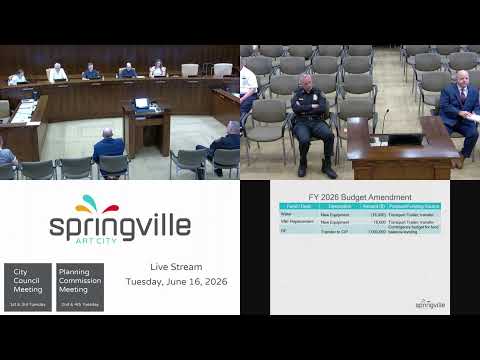
Finance Director Bruce Riddle told the council the city treats transfers from enterprise funds in three ways: administrative fees (cost allocations), operating transfers (no repayment expectation) and in-kind service charges. Together those items amount to approximately $8.9 million in transfers to the general fund in the budget; Bruce said administrative-fee calculations total about $4.3 million, operating transfers about $3.7 million, and accounting for services provided to the general fund adds roughly $926,000.
Rationale and comparisons: Bruce explained the operating-transfer philosophy as akin to a fee-in-lieu-of-franchise or a dividend to resident-owners of a municipally run utility; because Springville operates its own power, water and sewer systems, the transfers function like a locally retained return that would otherwise go to private shareholders in investor-owned systems. The council asked whether these transfers are effectively dividends; staff said they could be viewed that way but framed them as long-standing, formulaic budget practices.
Streets fund accounting: Council members queried a $374,000 administrative allocation to the new streets fund; Bruce explained that moving the streets department out of the general fund made those administrative costs visible—this is a reclassification rather than new money, he said.
Transportation utility fee and utility rates: Bruce summarized the proposed transportation utility fee (TUF) under consideration: a $4 per month fee contemplated to take effect in October, with statutory requirements that fee levels be correlated to user impact. He said the fee is intended to address a projected multi-decade funding gap in maintaining streets, sidewalks and active-transportation facilities. On utilities, staff proposed inflation-driven rate adjustments in the 2–4.5% range for water, sewer and power; Bruce said the average household impact of the combined utility changes should be roughly $6 per month.
Public process and next steps: The required public hearing on enterprise transfers produced no public comments; the council closed the hearing and then proceeded with other budget items. Staff said implementation of any TUF would follow a separate, statutory process with additional public meetings and notices. Council members emphasized transparency and urged public participation in upcoming meetings on rates and fees.