Get Full Government Meeting Transcripts, Videos, & Alerts Forever!
Get email alerts on the Wastewater Treatment topic
No spam. Unsubscribe anytime.
Tiffin outlines $27 million wastewater upgrade, plans cloth‑media filtration to boost wet‑weather capacity
Summary
City staff told council the water pollution control plant will add a cloth‑media filtration system to treat peak flows, increasing combined capacity to about 45 million gallons per day; construction is to begin after a recent contract award and is scheduled online by July 2028.
Tiffin officials on June 15 detailed a major upgrade to the city’s wastewater treatment system, telling council the project will add a high‑rate cloth‑media filtration unit and bring peak treatment capacity to roughly 45 million gallons per day.
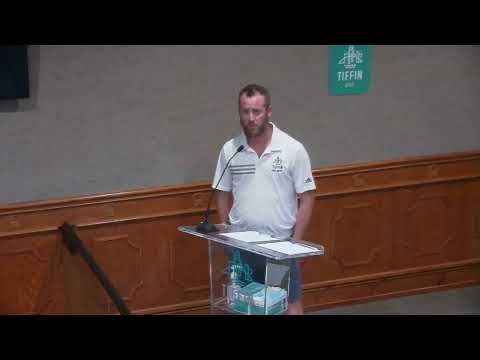
The Water Pollution Control Center’s Kevin Hughes said the city selected a cloth‑media filtration system (described in materials as an Aqua Storm/Aquadisk cloth‑media filter) rather than a single large equalization basin. He said the chosen filter will treat up to 32 million gallons per day and, combined with the plant, provide approximately 45 million gallons per day of treatment during consecutive rain events. Hughes told the council the construction bid was awarded to Adena and the overall project cost is about $27 million with expected online operation by July 2028.
Why this matters: Hughes said the work is part of the city’s long‑term control plan to reduce combined sewer overflow events to no more than four per year. He also reviewed previous upgrades (2015 bar‑screen and aeration improvements, and a 2021 expansion that increased capacity from 4 MGD to 13 MGD) and noted operational benefits such as lower chemical use and reduced electricity costs after prior equipment changes.
Hughes said the plant treated roughly 1.14 million gallons last year and has not recorded significant EPA violations since the upgrades. He also noted the MPDS permit expired in April and the city is awaiting a draft permit from the EPA, after which the city will have an opportunity to comment.
City operations details: Hughes described related investments — a new generator that allows whole‑plant operation during outages, SCADA upgrades enabling remote monitoring, and pump and solids‑handling improvements. He warned that disposable “flushable” wipes continue to cause problems at lift stations and urged residents not to flush them.
Next steps: Construction for the filtration system is expected to begin in the coming months under the Adena contract, with operations targeted in mid‑2028, subject to the contractor schedule and permitting.