Get Full Government Meeting Transcripts, Videos, & Alerts Forever!
Get email alerts on the Legal Actions Outside Counsel topic
No spam. Unsubscribe anytime.
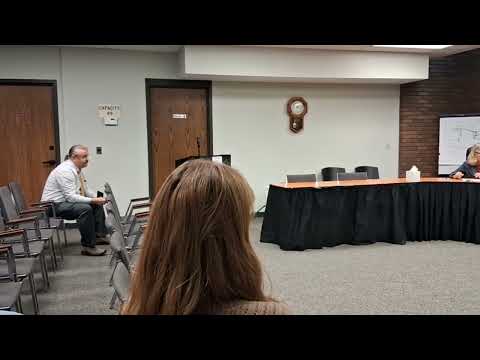
Madison County supervisors authorize outside counsel for three litigation matters after closed-session discussion
Summary
Madison County supervisors voted to authorize outside counsel to handle three legal matters — a complaint to the Iowa Public Information Board, an imminent dispute over the county auditor’s handling of invoices, and a pending litigation involving the auditor — after a closed-session strategy discussion under Iowa Code §21.5(1)(c).
Madison County supervisors voted at a public meeting to authorize outside counsel to proceed in three legal matters after a closed-session strategy discussion the board said invoked Iowa Code §21.5(1)(c).
The actions authorized outside counsel to handle: (1) a current complaint filed with the Iowa Public Information Board; (2) an imminent litigation matter involving the county auditor’s handling of outstanding invoices; and (3) a pending litigation matter involving the county auditor. The board moved into closed session to discuss strategy on those topics and later returned to take the recorded motions in open session.
Why it matters: The decisions authorize lawyers outside the county’s regular counsel to represent the county in multiple litigation tracks touching the auditor’s office and public-records oversight. The board also addressed procedural matters about who would serve as clerk during the closed session and whether the identity of the outside counsel would be disclosed.
Attorney Michael (addressed by the board during the meeting) advised that the three items listed on the meeting notice were appropriate subjects for closed-session discussion under the cited statute, saying, “The three things on the notice are things that can be and should be discussed in close session.” The board designated Cara to serve as clerk for the closed session and identified Emily Strong as the attorney assistant designated to act as clerk.
After returning to open session, the board took three separate motions to authorize outside counsel to proceed in each matter "in the manner as was discussed in closed session." Each motion was moved and seconded; the transcript records that the motions carried. The second motion, authorizing counsel in the imminent-auditor litigation, was retaken at one member’s request because that member intended to abstain; the transcript records at least one abstention on the retaken vote but does not provide a roll-call tally in the public record.
A board member raised concern about charging the county for a lawyer to discuss a potential lawsuit. A board member identified in the record as Diane said she opposed the approach, stating, “I’m very opposed. I want to protect the people.” The board chair responded by noting the board relied on legal advice and that the county’s attorneys represent the county’s interests.
The meeting minutes note that the person who made the motions and the second were identified in the record (the transcript indicates the motions were moved by Hobbs and seconded by Stansel), and that the board declined at that time to disclose the identity of the outside counsel. Michael advised that disclosure of the outside counsel’s identity was not required at that point.
The board adjourned after taking the three motions. The transcript does not record specific dollar amounts for legal fees, the name of the outside law firm, or a roll-call vote count for each motion; the public record in this transcript therefore shows the motions carried but does not provide detailed vote tallies or the outside counsel’s identity.
What happens next: The board’s next steps — including whether it will disclose the firm hired, the terms and cost of engagement, or any subsequent public filings — were not specified in the transcript. The minutes reflect that disclosure about counsel "will come soon."