Get Full Government Meeting Transcripts, Videos, & Alerts Forever!
Get email alerts on the Food Service Regulation topic
No spam. Unsubscribe anytime.
Council adopts ordinance aligning food-service rules with new state law; food-truck permitting moves to state
Summary
The council adopted an amendment to chapter 18 of the city code to conform local food-establishment fees and mobile food-unit regulation to recent state laws (Senate Bill 1008 and HB2844). The ordinance removes local permitting and inspections for food trucks and adjusts fees to state caps; councilors discussed potential loss of local fee revenue and inspector workload.
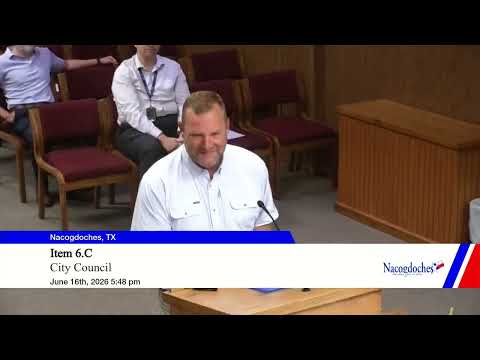
The Nacogdoches City Council on June 16 adopted an ordinance amending chapter 18 (business, article 3) of the city code to align local food-service permitting and fees with recent state legislation.
City Attorney Jerry Baker reviewed two laws passed by the Texas Legislature: Senate Bill 1008, which caps local food-establishment permit fees at the levels charged by the Texas Department of State Health Services and limits certain combined local fees, and HB 2844, which established a uniform statewide licensing and regulation framework for mobile food units (food trucks). Baker explained the ordinance’s changes, including a separate division for mobile food units, removal of duplicate local fees that exceed state caps (for example, temporary-food permits), and the removal of local permitting and inspection authority for food trucks now covered by the state. The transcript quotes Baker saying the state "has adopted certain standards" and that HB 2844 makes food-truck permitting a state function while allowing the state to contract locally for inspections.
Councilors asked about the ordinance’s local impacts. Baker said brick-and-mortar establishments would largely be unaffected but the city will lose the fee revenue associated with permitting food trucks; he also noted the state law goes into effect July 1 and the city ordinance would go into effect 10 days after approval. Councilors discussed whether the change could increase the number of food trucks and whether food safety would be affected; Baker said food trucks will still be required to meet state requirements.
The council voted to adopt the ordinance as presented. The change brings local code into conformance with state law and removes local food-truck permitting and inspection authority.