Get Full Government Meeting Transcripts, Videos, & Alerts Forever!
Get email alerts on the Highly Capable Program topic
No spam. Unsubscribe anytime.
District reviews highly capable identification, credits open house for enrollment gains
Summary
Dr. Colin Ryan outlined the district's highly capable program, including family/teacher recommendation pathways, CogAT testing, multi-age classrooms at Twin City and expanded secondary honors/AP options; he credited outreach events and promised data on opt-in rates and assessment-language access.
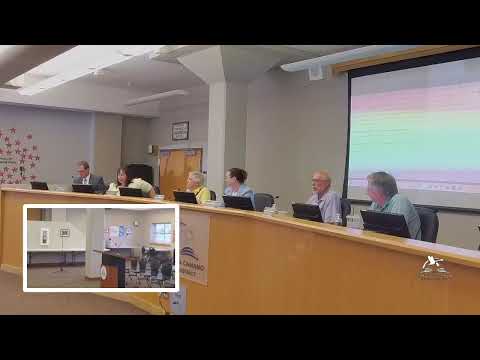
Dr. Colin Ryan presented the Stanwood-Camano School District's annual highly capable program update at the June 16 board meeting, describing how students are recommended, tested and placed and answering board questions about access and measurement.
Ryan said students may be recommended by families or teachers and that recommended students are invited to take the CogAT cognitive assessment as part of the district's identification process. He described multiple instructional models available after identification: multi-age self-contained classrooms at Twin City, cluster-grouping at home schools, grade acceleration and accelerated options at the secondary level such as honors, Advanced Placement and Running Start.
"There's a lot of access to test based on recommendation," Ryan said, describing the district's use of multiple data sources, including formative assessments and dynamic indicators, to identify candidates. He named Twin City teachers Tracy and Casey and thanked Principal Ryan Barson for hosting outreach events that, he said, have helped increase participation.
Why it matters: Ryan told the board the district's outreach, including a third annual open house for the highly capable program, appears to have shifted family decisions. He said some Twin City multi-age classrooms are near capacity and that the district will continue offering differentiated options so families can choose program models that best fit students and siblings.
Board members pressed for data on how many families opt to keep a child at a home school versus enroll at Twin City, and whether students whose primary language is Spanish or another language can access the CogAT or equivalent testing in their native language. Ryan said he would provide exact opt-in percentages and noted some assessment subtests are less language-dependent, but he acknowledged language-access remains an area for improvement.
The district also discussed monitoring student progress once placed: Ryan emphasized using multiple measures and expanding student voice panels and teacher professional development so instructional staff can differentiate supports. He noted that the Office of the Superintendent of Public Instruction requires a program audit for highly capable programs and that the district is preparing for that review.
The board did not take a formal vote on program changes; Ryan committed to return with precise participation figures and more detail on assessment-language accommodations.