Get Full Government Meeting Transcripts, Videos, & Alerts Forever!
Get email alerts on the Budget topic
No spam. Unsubscribe anytime.
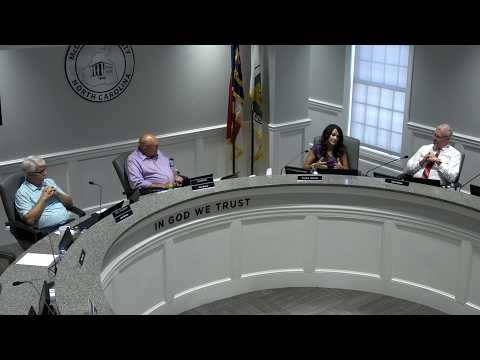
McDowell County board trims budget incentives, rejects vehicle fee and weighs employee pay increases
Summary
During a lengthy budget discussion the board voted to eliminate a 1% early-payment property tax discount (3–1), declined a proposed $7 per-vehicle fee (4–0), and approved applying tipping fees to private haulers; the board deadlocked 2–2 on a proposed set of 2% COLAs and adjustments to the employee insurance set-aside.
The Board of Commissioners held a detailed budget discussion and took several discrete revenue and fee actions on June 15 as staff sought direction to close a roughly $800,000 projected shortfall.
On revenue measures, commissioners voted 3–1 to eliminate the 1% early-payment discount for property-tax payers (an estimated $185,000 boost to revenues). The board voted 4–0 not to implement a proposed $7 vehicle-registration fee (estimated $167,000) and voted 4–0 to require private residential haulers to pay tipping fees at the county scale (estimated additional revenue of about $76,000), although the board's discussion reflected concerns about municipalities and carve-outs for local services.
The board debated proposed employee-cost provisions in the draft budget. Staff had presented a package that included a 2% cost-of-living increase (COLA) for county employees, a 2% increase for schools and community college, and a per-employee self-insurance set-aside. Commissioners split on the insurance allocation and COLA levels; a motion to proceed with the 2% package and a reduced insurance set-aside resulted in a 2–2 tie, leaving the issue unresolved and to be revisited before final adoption.
County staff cautioned that even with the approved revenue moves the budget would likely require a fund-balance appropriation to fully close the gap. "I don't have that confidence," one staff member said when describing the certainty of revenue estimates, urging caution before committing to a larger appropriation or higher recurring expenditures.
Staff will update commissioners with revised budget numbers incorporating the voted changes and return to the board for final adoption before the statutory deadline.