Get Full Government Meeting Transcripts, Videos, & Alerts Forever!
Get email alerts on the Proclamation Controversy topic
No spam. Unsubscribe anytime.
‘Traditional nuclear families’ proclamation sparks hours of testimony and sharp divisions at Battleground meeting
Summary
Mayor Eric Overhauzer’s proclamation honoring “traditional nuclear families” prompted sustained public comment — dozens of speakers gave testimony both for and against the proclamation, alleging exclusion, divisiveness, and misallocation of council attention and city resources.
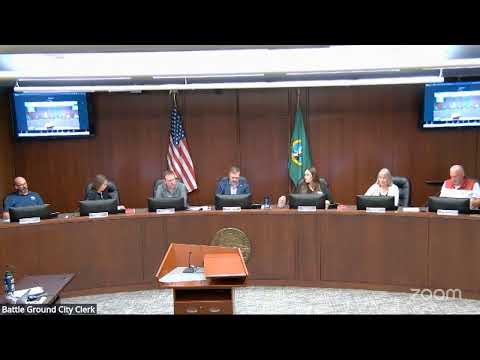
Mayor Eric Overhauzer’s proclamation recognizing “traditional nuclear families” at Monday’s Battleground City Council meeting triggered a lengthy, emotional public comment period and sharp debate among residents and elected officials.
The proclamation, read aloud at the meeting, praised a model described in the text as “a husband, a wife and their children” and framed that family form as a foundational social institution. After the mayor opened the proclamation for presentation, audible disruptions in the chamber prompted a two‑minute recess before the meeting resumed.
Public comment extended far beyond the scheduled one‑hour period; 63 speakers registered and a large number used the council podium to express views both supporting and opposing the proclamation. Supporters said the declaration affirmed local values and family stability. “This proclamation recognizes fathers and mothers who work hard to provide for their children and who invest themselves in the next generation,” one supporter told council.
Opponents called the move exclusionary and politically motivated. “This proclamation is not representative of Battleground,” said Rebecca Posttopac during the public comment period, adding that many families in the city do not match the proclamation’s description and that the statement risks marginalizing single‑parent, blended, and LGBTQ+ families. Several speakers tied the mayor’s declarations to broader concerns about the allocation of city staff time and legal expenses, noting earlier council actions and public controversies.
Council members were split on the question of proclamations and their proper role. Some councilors argued proclamations are ceremonial and fall within mayoral prerogative, while others raised procedural and policy concerns about using proclamations to make statements that some residents view as political or exclusionary. Council Member McCoy later proposed a governance‑manual change to restrict proclamations that could be read as policy statements; that procedural motion was discussed and ultimately not adopted on the night’s agenda.
What’s next: The council took no formal policy action to rescind the proclamation during the meeting. The episode underscored heightened political divisions and prompted multiple residents to call for clearer council rules on proclamations, invocations and the use of city resources.