Get Full Government Meeting Transcripts, Videos, & Alerts Forever!
Get email alerts on the Municipal Finance topic
No spam. Unsubscribe anytime.
Shelton council studies state 'separately managed accounts' program for city funds
Summary
City Finance Director and guests from the Washington State Treasurer's Office presented the separately managed accounts (SMA) program to the Shelton City Council on June 9. Presenters said SMAs offer an intermediate-term, state‑managed alternative to the LGIP with a $10 million minimum; council asked for more time and information and took no vote.
The Shelton City Council on June 9 heard a presentation from the Washington State Treasurer’s Office on joining its separately managed accounts (SMA) program as a way to invest municipal funds beyond the daily-liquidity local government investment pool (LGIP).
Finance Director Terry Schmeltzer introduced Amanda Hudson and Shawn Kovall of the state Treasurer’s investments team, who said SMAs are individually custodied portfolios (Northern Trust) that mirror the state’s core fixed‑income strategy and typically hold securities maturing within five years, with an effective duration of about two years. “If Shelton were to participate…you would have your own holdings,” Hudson said, explaining that SMAs are account‑specific rather than pooled shares.
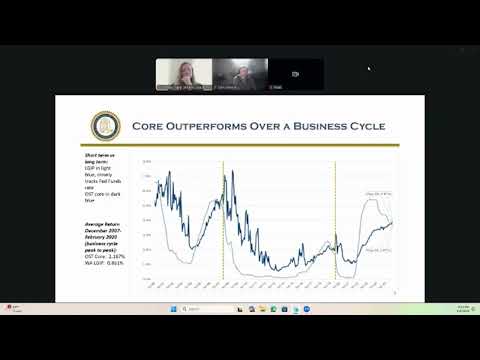
Why this matters: presenters argued the SMA design can produce higher yields over a business cycle than the LGIP while preserving safety and liquidity, making it a potential option for jurisdictions that have material balances they do not expect to spend in the near term.
Details presented: the SMA program began as a 2018 pilot (Pierce County) and was standardized in 2019. Staff said the program now manages 16 portfolios totaling about $1.25 billion and requires a $10 million minimum investment; portfolios have size ranges up to about $300 million. Hudson described the fee structure as taken from earnings and based on average book balance; the office reported a fee range of two basis points to four and a half basis points annually and illustrated that a $10 million account would incur roughly $350–$400 in monthly fees drawn from earnings.
On portfolio construction, Kovall, the Treasurer’s senior portfolio manager, said the SMA core mirrors the state’s core mix of U.S. Treasury securities, agency securities (Fannie Mae, Freddie Mac, Federal Home Loan), supranationals (World Bank, Asian Development Bank) and, when appropriate, limited callable or floating‑rate exposure. “We try to keep our duration around two,” Kovall said, noting the office shifted from expecting Federal Reserve rate cuts to a more neutral posture because recent inflation and geopolitical developments have repriced markets.
Council questions focused on minimum size, liquidity and operational impacts. Presenters said SMAs are liquid and that there are no contractual withdrawal gates, but cautioned the strategy works best when balances remain relatively stable and advance notice of large withdrawals allows staff to manage sales and maturities. When asked what would happen if a jurisdiction dropped below the $10 million minimum after an emergency withdrawal, presenters said they would handle such cases on a case‑by‑case basis and work with the city to find a reasonable solution.
Local context: City staff reported Shelton currently holds about $26.7 million in the LGIP plus other bank balances, and suggested starting at the $10 million minimum while keeping remaining funds available for projects and near‑term needs in the LGIP. Council members raised questions about whether moving funds would affect the city’s credit rating and noted the desire to reduce staff time spent on investment accounting; presenters said they do not expect the funds to be materially “tied up” and that SMA custody and reporting can simplify accounting.
Next steps and outcome: one council member asked for one or two business days to review the materials; staff said it would compile follow‑up questions for the Treasurer’s Office and could schedule the item for a future meeting. No formal motion or vote was taken.
The council adjourned the study session without action; staff may return with a recommendation and additional information if council requests.