Get Full Government Meeting Transcripts, Videos, & Alerts Forever!
Get email alerts on the Food Truck Permitting topic
No spam. Unsubscribe anytime.
Shelton residents, food‑truck owners press council for clearer permitting; council schedules a study session
Summary
Multiple residents and food‑truck operators told the council the city’s permitting and enforcement for mobile vendors feels inconsistent and punitive; council members asked staff to bring a focused study-session briefing on state vs. local rules and possible local code changes.
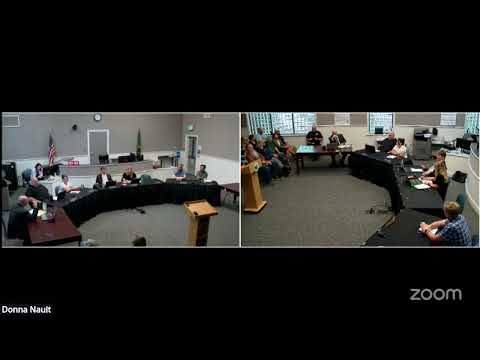
Shelton — Residents and food‑truck operators urged the Shelton City Council on June 16 to clarify and, where possible, ease local permitting rules after several speakers described changing enforcement, inspections they said were intrusive, and lost community space.
"I'm not here tonight asking for special treatment. I'm asking for fairness. I'm asking for consistency," Jackie Jwitt, a Shelton business owner, told the council during public comment. Jwitt described project delays and repeated, shifting requirements during permitting for the Mason Food Court that left her and partners uncertain how to show compliance.
David Breza Hayden, a food‑truck owner operating on the same lot, said he had "watched Dean pour so much money into that place to make it nicer, cleaner" and that sudden enforcement actions had removed seating and games that once made the site a family gathering place. Sue White, who operates Sweet Laya Snow Cone, said a building inspector walked onto her truck without permission and that she is pursuing the matter with Washington State agencies: "A building inspector actually walked onto my truck, unbeknownst to me, and did an inspection on my truck, which is illegal."
Speakers and several council members framed the issue as balancing safety and sanitation rules set by state code with local practices that could be clearer and more supportive of small businesses. Cat Otto, whose adult son with autism benefited from the food‑court’s accessible outdoor setting, warned that "when city rules become so restrictive that places like this can no longer operate, we lose more than [a] food court." Others, including long‑time business owners, urged the council to reduce redundant permitting and improve customer service from city departments.
Interim public comments from staff and council clarified the legal constraints: local code can be more restrictive than state health and building codes but cannot relax state requirements. A council member asked staff to return with specifics on what in the local code is based on the International Building Code, state building code interpretations, health code requirements, and what could be changed locally.
Council members directed staff to prepare a dedicated study‑session briefing on the food‑truck ordinance and related code interpretations so the council can consider possible updates and pathways to consistent enforcement. One council member said, "I would like to see if you can bring that back to us in a study session," and several members expressed interest in scheduling the discussion before summer ends. Mayor Sherman invited affected owners and the public to the council’s strategic planning open house and emphasized the council’s shared goal of supporting small businesses while protecting public safety.
Next steps: staff will prepare a study‑session briefing on state vs. local code interpretations, enforcement practices, and options for local code changes; the council signaled it wants that session scheduled in the coming weeks.