Get Full Government Meeting Transcripts, Videos, & Alerts Forever!
Get email alerts on the School Safety topic
No spam. Unsubscribe anytime.
Arizona board approves FY27 application process for $127M school safety program
Summary
The board approved process criteria and a budget for the Department of Education’s school safety grant program, which funds SROs, SSOs, counselors and social workers and will open a FY27 application cycle aimed at expanding trained personnel in schools.
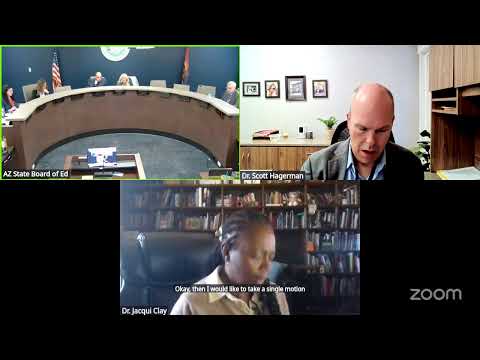
The Arizona State Board of Education on Jan. 20 approved the Department of Education’s proposed process criteria and administrative budget to open the FY27 application for the statewide school safety program, a multi‑year grant that now funds more than 1,000 school safety positions statewide.
Mike Curtinbach, director of school safety at ADE, told the board the program has expanded from $12 million in 2018 to a cohort that currently supports roughly 1,155 awarded sites and about 1,086 awarded positions after the department used reverted funds to expand coverage. The portfolio includes school resource officers (SROs), school safety officers (SSOs), juvenile probation officers (JOs, where available), school counselors and school social workers.
Curtinbach described statutory changes (House Bill 2074) that explicitly recognize school safety officers and required annual training and site‑based planning. He said the FY27 application window is expected to open Feb. 1 and close April 15, with awards made to fund three‑year grants beginning July 1, 2026.
The department emphasized training and standardized reporting: selected personnel must complete specified annual trainings (including adolescent mental health, civil rights and interactions with students with disabilities), participate in site safety teams, and maintain standardized logs and twice‑annual surveys (the department partners with ASU for program evaluation).
The board voted to approve the process criteria and administrative budget after members asked for clarity on training, site roles and the department’s approach to filling officer shifts (including third‑party partnerships and use of retirees and trained SSOs to address shortages). A companion oversight requirement requires each awarded site to submit an encrypted school emergency operations plan for secure review as part of the application scoring.
Board members praised the program’s intent and training but asked staff to continue to refine guidance on operational roles, local site supervision and documentation to ensure consistent site‑level practice.
Outcome: the board approved the ADE’s FY27 application process criteria and administrative budget to solicit grant applications for SRO/SSO/counselor/social worker positions. The department will provide webinars and regional trainings for applicants before the Feb. 1 opening.