Get Full Government Meeting Transcripts, Videos, & Alerts Forever!
Get email alerts on the Education Programs topic
No spam. Unsubscribe anytime.
Wayne-Westland STEM Center showcases student-built adaptive tools in ‘Project Possible’ presentation
Summary
The district's STEM Center outlined student projects that produced 3D-printed name stamps, adaptive crayons and an environmental-control unit prototype that replicates costly devices for a fraction of the price. Presenters said grants and donations funded materials and asked for continued board support.
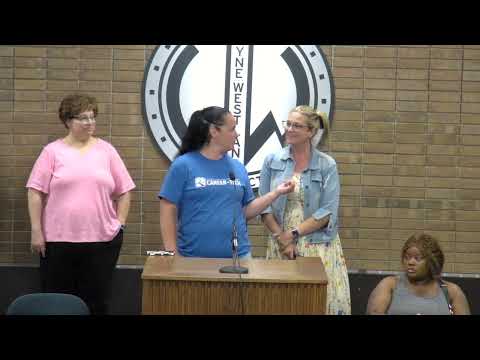
Dr. Karen Dickelman of the district STEM Center and classroom teachers detailed a yearlong collaboration called Project Possible that paired STEM students with special-education classrooms to design adaptive learning aids.
"We started by asking what they needed," Dr. Karen Dickelman said, describing prototypes that included 3D-printed name stamps with detachable handles and sensory mats used across multiple classrooms. Angela, a STEM teacher working with the partner school, said students iterated prototypes in Tinkercad and produced adaptable stamps that can be reused when students move buildings.
Josh Rublicky, a cybersecurity and ethical-hacking teacher at William D. Ford, described an "environmental control unit" the team rebuilt. He said commercial units can cost $350 to $1,000, but their student-driven prototype cost under $70 to produce. "We've gone through 14 iterations of this design so far," Rublicky said, noting further refinements are planned for next year.
Board members asked about funding and materials. Miss Claire and presenters said the work relied on a mix of small grants and donations: a Samsung Solve for Tomorrow award, a $1,000 Special Olympics grant and donated items used to retrofit ride-on toys into adaptive jeeps. Presenters said some curriculum and materials were funded by grant indirects and local donations.
The presentation emphasized collaboration: STEM classes met with teachers from multiple buildings, and teachers reported tying STEM activities to English Language Arts and other standards. Angela said the center operates across pre-K to 12th grade, with scheduled days when elementary and middle-school teachers can sign up to bring classes for design challenges.
Presenters asked the board to continue supporting partnerships and grant-seeking that help scale the program. The board responded with applause and praise for student achievements; members said they want to see the program grow and noted its cross-curricular benefits.