Get Full Government Meeting Transcripts, Videos, & Alerts Forever!
Get email alerts on the Zoning Ordinance Update topic
No spam. Unsubscribe anytime.
Planning commission workshop flags overlapping residential districts, debates form‑sensitive downtown rules and concerns about borough’s 41‑acre light‑business‑
Summary
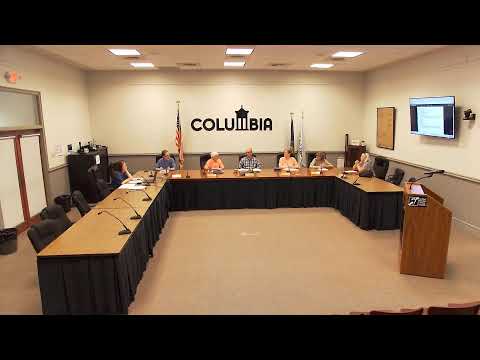
At a June 16 workshop, DCD consultants told the Columbia Borough Planning Commission that many residential districts have overlapping permitted uses and proposed simplifying the ordinance; commissioners also discussed downtown form standards and community concerns about a 41‑acre light business parcel and a proposed data center.
DCD planning consultants presented a first‑workshop review of Columbia’s zoning ordinance on June 16, urging the Planning Commission to consider consolidating several overlapping residential districts and to refine standards that shape downtown redevelopment.
"The matrix is a tool," said Chris Gavin, a DCD planning specialist, describing the zoning‑district matrix the consultants used to inventory permitted uses, dimensional standards and definitions. "This is shared diagnosis. This is not a final set of recommendations by any means." Gavin told commissioners the analysis is intended to surface simplification opportunities, improve clarity and support later model ordinance concepts.
The consultants pointed to duplication among rural residential, low‑density residential and several medium/high density districts, and noted that medium‑ and higher‑density categories allow similar housing types. Commissioners said simplifying the number of residential categories could make administration and permitting clearer while preserving neighborhood‑specific nuances.
Members flagged several recurring operational issues: short‑term rentals are permitted only in a subset of districts; home‑occupation classifications can require either an administrative permit or zoning‑hearing‑board review; and the zoning hearing board process carries a $500 non‑refundable filing fee in some cases. Commissioners also discussed how grandfathered nonconforming businesses and limited parking in older parts of town complicate enforcement and redevelopment.
The discussion turned to commercial districts. DCD observed that some districts appear differentiated more by geography and context than by distinct use tables, using downtown commercial and neighborhood commercial as an example. Commissioners said downtown form standards — small lots, zero setbacks and high building coverage — align with the borough’s historic core and can facilitate adaptive reuse if standards are crafted to protect street form while enabling new housing.
Members further reviewed the borough’s only light business (LB) district, a largely undeveloped 41‑acre parcel formerly used as an airport. Commissioners explained council issued an RFP, received a sealed bid and rejected it after finding a technical noncompliance with the Municipalities Planning Code (payment terms); council is preparing for a second solicitation or other disposition options. Participants said the property is intended for job creation and tax‑base expansion, with a portion reserved for conservation and public trails.
Several attendees also raised concerns about the scale and impacts of potential data‑center development on the parcel. A participant noted strong public opposition at a recent council meeting and questioned water and power capacity for a large data center; the transcript records the participant’s recollection that 285–500 residents attended that council meeting to express opposition. Commissioners said council is drafting a data‑center ordinance or considering a special‑use process to add site‑specific standards addressing parking, setbacks, buffers, emergency contacts and environmental impacts.
Next steps: DCD will complete the matrix analysis, prepare conceptual before‑and‑after examples for a second workshop, and begin drafting model ordinance language and best‑practice examples for discussion with the commission and, later, council. The commission set its next meeting for July 21, 2026.
The meeting included routine business: approval of the March 17 minutes and adjournment at 8:15 p.m.