Get Full Government Meeting Transcripts, Videos, & Alerts Forever!
Get email alerts on the School Consolidation Planning topic
No spam. Unsubscribe anytime.
Poudre School District unveils nine action teams for consolidation planning; board debates public-engagement timeline
Summary
Staff outlined nine action teams to support school-consolidation scenario development, demonstrated a new facilities dashboard and scorecards, and described confidentiality NDAs for volunteers. Directors debated how and when to brief communities and proposed a sequencing of mid-September CPC consensus, school-level notifications, and a public board presentation in late September or October.
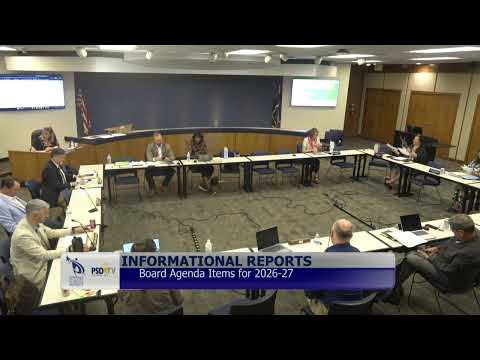
Poudre School District R-1 staff presented a detailed update on the Comprehensive Planning Committee's (CPC) action-team structure and data tools at the board's June 16 special meeting, sparking an extended board debate over public-engagement timing and communication strategy.
Lead Assistant Superintendent Dr. Tracy Gile laid out nine action teams intended to distribute work for scenario development. Four "community" action teams (climate and culture; supporting families; continuity of programming; building utilization) were filled via an application process; staff reported roughly 50 people selected across those teams after 62 applications. Five technical teams (HR/employee processes; records/finance/school codes; facility needs; safety/traffic/transportation; communications/events) will be primarily led by district or city staff with community or expert input.
"An action team would mean it's a team coming together to produce a deliverable," Dr. Gile told the board, describing the teams as short-term groups charged with producing plans or proposals on assigned topics.
Staff also ran a brief dashboard exercise to demonstrate where the CPC's evidence lives online. Board members were guided through the facilities data dashboard, scorecards for facility-condition assessments and per-pupil expenditures, and a glossary of definitions. The dashboard is intended to be the primary public repository for enrollment counts, projected enrollments, utilization, facility condition scores and financial metrics.
On confidentiality, staff said legal counsel Autumn Aspen drafted two nondisclosure agreements: one intended for staff and a volunteer version for community members who will see draft scenarios. Directors asked about enforceability; staff said volunteers can be removed from committees for violations but civil enforcement is limited.
The board devoted a large portion of the meeting to when and how to engage the broader community. Staff proposed a sequencing principle in which the CPC would reach consensus on a single, interconnected recommendation in mid-September; individual school communities named in a scenario would be informed shortly after; a public board presentation would follow in late September or early October; and a board-level decision would occur in late October or early November. Directors debated this timetable at length, raising two core concerns: (1) affected families need sufficient lead time to make choices (school-choice windows and timelines were discussed), and (2) staff and volunteer participants need protection and space to deliberate candidly during the scenario-development phase.
Several directors said they preferred more time for the CPC and action teams to complete substantive work before board-led public sessions, recommending two-by-two briefings among directors and a possible July retreat to coalesce board feedback. Others argued for earlier districtwide public outreach to reduce rumor-driven harm if draft information were to leak.
What's next: Staff said action teams are expected to do most work between June and September and to provide monthly updates that will be posted publicly. The CPC intends to synthesize teams' deliverables into a single recommendation for the board; staff and several directors committed to developing a clear, proactive communication plan if and when school communities will be named in a recommendation.