Get Full Government Meeting Transcripts, Videos, & Alerts Forever!
Get email alerts on the Quasi Judicial Training topic
No spam. Unsubscribe anytime.
Berthoud planning commissioners review quasi‑judicial rules and risk management in training session
Summary
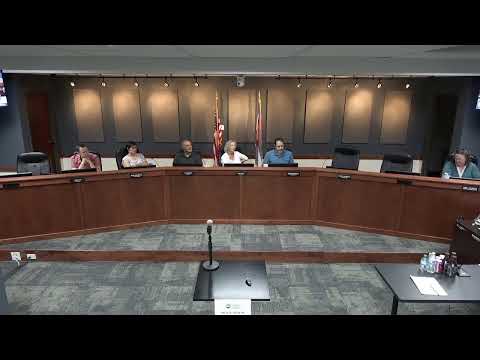
At a June 11 work session, the Town of Berthoud Planning Commission received training from CERSA counsel Sam Light and staff on quasi‑judicial decision‑making, ex parte rules, and how to apply code criteria versus comprehensive‑plan vision in development hearings.
Stacy Sigman, chair of the Town of Berthoud Planning Commission, opened the June 11 work session and introduced a training for commissioners on roles and responsibilities.
Sam Light, deputy executive director and general counsel for CERSA (Colorado Intergovernmental Risk Sharing Agency), told the commission CERSA provides the town’s property, casualty and workers’ compensation coverage and offers trainings and resources to reduce municipal liability. “We provide the liability coverage…everything from auto liability to slip‑and‑fall,” Light said, describing the agency’s role in defending municipalities against claims and advising on exposure reduction.
Light and community development director Anne Best Johnson walked commissioners through the practical differences between legislative policy work and quasi‑judicial adjudication. They emphasized that quasi‑judicial decisions—such as variances, rezones, conditional/special‑use approvals and final development plans—must be made on the basis of preexisting code criteria and the record produced at the public hearing, not on personal policy preferences.
Commissioners were given concrete cautions: avoid prejudicial prehearing statements; do not conduct independent fact‑finding (for example, performing private traffic counts and relying on them as evidence); and refrain from ex parte communications with applicants, opponents or other commissioners about the merits of a pending quasi‑judicial case. Light said these constraints protect the town from “Rule 106” administrative challenges in state district court and reduce the risk of broader civil‑rights claims.
The training also covered public‑testimony procedure and the chair’s role in preserving an orderly, equitable hearing. Staff urged commissioners to direct citizens to give relevant, fact‑based testimony tied to code criteria and to avoid extended back‑and‑forth with speakers during the public‑comment period.
Light reviewed ethics and conflict rules, urging early consultation with town counsel when commissioners are unsure whether a personal relationship or outside advocacy creates an appearance of impropriety. He recommended on‑the‑record disclosures when potential conflicts arise so objections can be resolved before deliberations.
The session closed with a reminder that strong, consistent process is the commission’s best defense: “If we make the right decision through a fair and defensible process applying the right criteria, then your decision is likely to be upheld,” Light said. The commission had no final land use votes that evening; the training was followed by staff updates and routine announcements.