Get Full Government Meeting Transcripts, Videos, & Alerts Forever!
Get email alerts on the Operating Levy topic
No spam. Unsubscribe anytime.
Consultant: Survey shows narrow community support for Kasson-Mantorville operating levy; board moves to draft ballot question
Summary
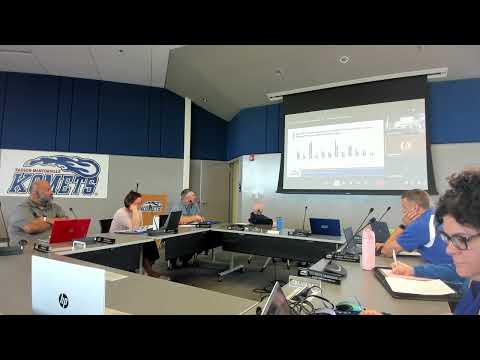
A consultant told the Kasson-Mantorville School District board that a 1,929-response community survey yields roughly 49% raw support for exploring an operating levy and an estimated 55–57% with outreach for a $400-per-pupil question; the board directed staff to prepare a draft ballot question for July.
Miss Peterson, the consultant who conducted the district’s community survey, told the Kasson-Mantorville School District board that the firm mailed 4,718 postcards and received 1,929 completed responses, which the team disaggregated into three voter groups: general citizens, parents and district employees. She said 11% of responses came from non-residents and would be excluded when estimating likely voter support.
Peterson outlined three levy options and the district revenue each would generate: roughly $850,000 for a $400-per-pupil levy, a little over $1 million for $500 per pupil and about $1.2 million for $600 per pupil. She said general-citizen support for an operating levy varied by option and that, after weighting parents and general voters, the district sits near a 49% baseline for pursuing a referendum but could reach roughly 55–57% in favor of a $400-per-pupil question with a targeted information campaign.
"We mailed out 4,718 postcards to all residential households within your community," Peterson said in the presentation, and she emphasized the importance of educating voters about how state funding and per-pupil comparisons with neighboring districts affect local needs. On the likely ballot format, she recommended a single base question (the $400 per pupil option) rather than a dual-question approach because dual questions can confuse voters and lead to unintended vote patterns.
Board members pressed Peterson on timing, the risk of returning to voters multiple times, and whether a multi-question ballot could preserve a larger funding ask. Peterson recommended adopting the ballot language in July to allow a 65–70 day information campaign beginning in August, with early outreach tied to back-to-school messaging and heavier motivation work in October.
Board member Ben asked whether the district could instead ask for an intermediate amount (for example, $450 per pupil). Peterson replied that the survey was calibrated to the options presented and that adding midpoint options changes response dynamics; she reiterated that the data best supports a $400-per-pupil initial question with a later "baby bump" if the board wants to pursue additional funds.
The board discussed next steps: having the district attorney or bond counsel draft formal ballot language and scheduling a work session to finalize the question. Several trustees noted the need for a robust public information campaign if the board votes to place a levy question on the ballot.
The presentation and Q&A concluded with the board asking staff to prepare a draft ballot question for review at the July meeting and to schedule a work session to discuss messaging and timeline.