Get Full Government Meeting Transcripts, Videos, & Alerts Forever!
Get email alerts on the School Improvement topic
No spam. Unsubscribe anytime.
Giles and Lee present improvement plans emphasizing math, reading and behavioral supports
Summary
At its June 16 meeting, the Norridge SD 80 Board heard school improvement plans from Giles and Lee schools that set measurable goals for math and reading growth, expanded behavioral supports and proposed schedule and curriculum changes to raise student outcomes in 2026–27.
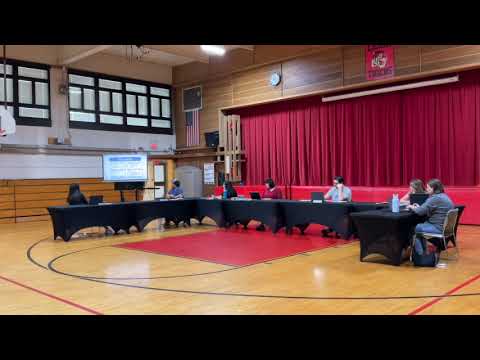
The Norridge SD 80 Board of Education on June 16 heard presentations from Giles and Lee schools outlining goals and actions for the 2026–27 school year, with a focus on raising math and reading growth and strengthening behavioral supports.
Giles School reported enrollment of 482 students (129 in fifth grade, 114 sixth, 119 seventh and 120 eighth), 32.5 certified teachers, three paraprofessionals, one nurse, five support staff and 2.2 building administrators. The presenter said 55% of Giles students made typical math growth in 2025 and set a target that 60% will meet their individual math growth goals in 2026–27. "We re-imagined and redeveloped a new schedule which allows for 80-minute math periods," the school team said, and described action steps that include ongoing professional learning communities (PLCs), data-driven instruction, targeted small-group instruction and monitoring individual math goals three times a year. The presentation noted the school is considering a new math program referred to in the slides as "I'm ready math."
On reading, presenters said 59% of students met typical growth this year and set a reading goal that 65% of students will meet their individual growth targets from fall 2026 to spring 2027. The team cited peer observations, structured PLC work and individualized reading goals as key strategies.
Giles also reviewed behavioral data: presenters reported a year-to-year rise in seventh-grade referrals while other grades showed decreases. The school said it will continue PBIS strategies, run weekly grade-level problem-solving meetings, offer targeted social-emotional supports and aim to reduce office discipline referrals by 5% in 2026–27. Presenters credited a check-in/check-out program (31 participants this year, eight successful exits) and a school resource officer who worked to build relationships as part of the approach.
Lee School reported roughly 608 students, with 44% qualifying for free or reduced-price lunch and 32% identified as multilingual learners. Lee highlighted a Golden Circle of Quality award for its preschool, recognition from Branching Minds for data-coordinated systems, and work with Midwest PBIS to increase fidelity in tiered supports. The Lee presentation said its tier-three fidelity improved from 0 to 13 out of 34 and set a goal to continue that progress.
Both schools emphasized multi-tiered systems of support, targeted professional development for staff and improvements to scheduling and curriculum to increase instructional time and consistency across grade levels. Giles presenters noted safety steps already in place — a digital hall pass, video monitoring and added base sensors — as part of creating a positive learning environment.
Student recognition and community context framed the night: an eighth-grade school citizen award was presented to Mat Carpick, who said the honor "symbolizes all the kindness I show towards others coming back to me." Board members did not vote on the presentations; the items were received for review and will inform the district's work heading into the 2026–27 year.
The board paused briefly for questions after each presentation and then moved on to other agenda items.