Get Full Government Meeting Transcripts, Videos, & Alerts Forever!
Get email alerts on the Public Health Tobacco Policy topic
No spam. Unsubscribe anytime.
Corte Madera directs staff to draft tobacco sales prohibition; Dec. 31, 2026 proposed as possible effective date
Summary
After a public workshop with more than a dozen commenters for and against, the council asked staff to return with draft ordinance options to prohibit commercial sales of tobacco and nicotine products; several members signaled support for a no‑exception ban and suggested an enforcement target of Dec. 31, 2026, pending final council action.
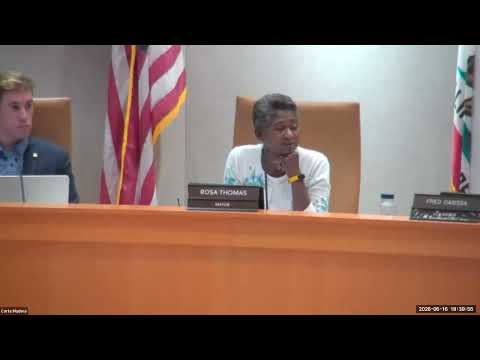
The Corte Madera Town Council held a workshop on June 16 to consider whether the town should pursue an ordinance to prohibit the commercial sale of tobacco and nicotine products. Staff clarified the scope: a sales prohibition would regulate business sales at local premises and would not criminalize personal possession or use; FDA‑authorized cessation products sold solely for therapeutic use would be exempt.
Rebecca, the staff presenter, explained the policy options and implementation tools used by other Bay Area jurisdictions—delayed operative dates, hardship extensions, and attrition models—and recommended the same education‑first enforcement approach used for the town’s recently adopted minimum floor price law. “This item is before council for discussion and direction only. No ordinance is being introduced or adopted tonight,” she said.
Public comment ran for well over an hour. Local physicians and county tobacco‑prevention staff urged a full end‑of‑sale ordinance without exemptions to reduce youth initiation and disease; student and resident speakers described family health impacts. Example testimony: Dr. John M., speaking for a medical society, urged the council to “move forward a complete end to sales without any exemptions.” By contrast, retail and industry representatives—including the California Fuels and Convenience Alliance and the National Association of Tobacco Outlets—warned that a local sales ban would shift purchases to neighboring jurisdictions or illicit markets and would hurt small independent stores.
Following public comment and extended council questioning about license valuation, attrition, hardship processes and enforcement partnerships with Marin County, councilmembers directed staff to return with a draft ordinance and implementation options. Several councilmembers signaled support for a no‑exception prohibition and suggested December 31, 2026 as a reasonable operative target if the council proceeds; staff will present specific ordinance language and transition options for council consideration at a subsequent meeting.
Next steps: staff will prepare ordinance drafts and implementation scenarios (including education, potential transition assistance, and enforcement approaches coordinated with Marin County Health and Human Services) and return to council for formal introduction and possible adoption.