Get Full Government Meeting Transcripts, Videos, & Alerts Forever!
Get email alerts on the Planning Processes topic
No spam. Unsubscribe anytime.
Planning board seeks a simpler application and clearer performance standards
Summary
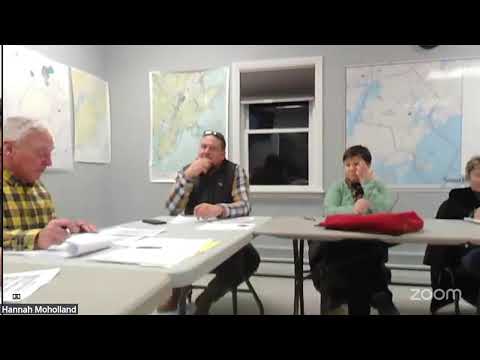
Members of the South Thomaston Planning Board recommended simplifying the planning application and performance-standards checklist—proposing a concise first-page checklist and a referenced second page—so decisions focus on site impacts rather than prescriptive text. They discussed hearings, site-plan scale and landscaping definitions.
The South Thomaston Planning Board spent substantial discussion on simplifying its planning application and the accompanying performance-standards checklist, with members urging a shorter front-page checklist and a separate reference page that would contain prescriptive ordinance details.
Several board members said the current form is too prescriptive and can constrain discussion of an application’s broader character and impacts. One member argued the front page should contain only the “big-ticket” items—hours, noise, size and character—with check boxes for rapid assessment, and that more detailed specifications (for example, exact noise dB thresholds or lighting standards) should be moved to a secondary reference sheet for applicants to consult.
The board discussed which types of applications should trigger a public hearing, noting that bylaws and ordinance language determine hearing requirements and that clear signposting on the application would help applicants know when an additional meeting is likely. Members also pressed for site plans to be drawn to scale (examples cited: 1/8" = 1') for applications where scale affects parking and layout decisions, instead of accepting schematic “napkin” sketches.
Board members identified several areas needing clearer definitions and enforceable standards, including landscaping versus visual screening and an explicit amendment pathway for existing approvals. They noted that town staff (referenced in the meeting as Terry) currently has limited enforcement ammunition when application materials are vague and recommended the application provide clearer guidance about documentation and expectations.
Members emphasized referencing statutes and state law where appropriate rather than copying statutory text into the form—both to avoid out-of-date text in the application and to provide clearer signposts to authoritative sources.
The board agreed a volunteer would compile suggested edits and circulate a revised draft for comment. That task and discussion about the revised application followed the permit vote earlier in the meeting; the session adjourned at approximately 6:37 p.m.
The board’s next steps are to circulate a redraft of the application and performance-standards checklist for review and to consider which application types will require a public hearing.