Get Full Government Meeting Transcripts, Videos, & Alerts Forever!
Get email alerts on the General Plan Update topic
No spam. Unsubscribe anytime.
Safford commission opens public outreach for 2026 general plan, with housing and water near top of list
Summary
The Safford Planning and Zoning Commission began public participation for the 2026 general plan update, unveiling an interactive online survey and a fast timeline that will culminate in voter ratification at the November general election. Early input flagged housing affordability, transportation and water conservation as top priorities.
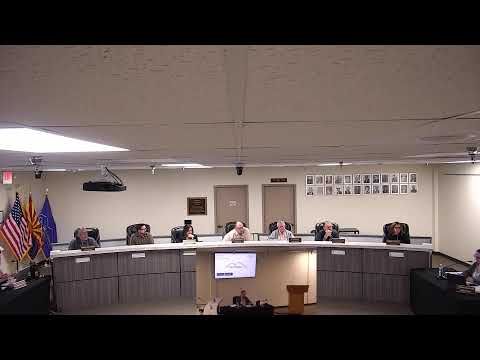
The Safford Planning and Zoning Commission on the evening called for residents to weigh in on the city’s 2026 general plan update, as consultants from the Planning Center rolled out an interactive survey and a compressed schedule that will send the draft to voters this year.
Director Imbik opened the public participation portion of the update and urged residents to take part, saying, “This is the way you guide the development of your community for the next 10 years.” The presentation to commissioners and attendees described a streamlined plan structure, multiple outreach channels (an online Minty survey, paper forms and in‑person events) and deadlines tied to state review and the ballot timeline.
The nut‑graf: the general plan sets the city’s long‑range land‑use, housing, transportation and resource policies and — because Safford’s population exceeds the statutory threshold — must be ratified by voters at the general election. That requirement compresses the update schedule: consultants and staff said a draft will be prepared for joint review with city council in late winter, a 60‑day agency review will follow, and the planning commission and council hearings are slated for spring ahead of the formal election notice deadlines.
Consultant Garrett Alre, presenting for the Planning Center, described an interactive “Minty” presentation and urged the audience to scan a QR code or use a paper map to provide live responses. Early live responses in the room and consultant summaries identified housing — especially affordability and annexation to support growth — as the most frequent priority, followed by recreational facilities and preserving Safford’s small‑town character. “Housing is a big one,” Alre said when reporting initial returns from the live exercise.
During the public‑comment portion, local real‑estate professional Riley Woods asked whether growth projections for the nearby mine were being incorporated into the plan. A staff member answered that Freeport is a publicly traded company that participates in public processes and that a housing study being produced by a planning group is expected by the end of February, but that exact employment numbers are not publicly available. “We do know the mine is growing,” staff said, “and they are participating in this housing study.”
Commissioners and citizens pushed for transportation and water issues to be addressed. Commissioner Raglin warned of long‑term water scarcity and urged stronger conservation measures and evaluation of reclaimed‑water options; staff said water conservation standards and recent state water policy developments will be considered in drafting policies and implementation measures.
Staff also outlined outreach and next steps: a virtual session for the public the following morning at 10 a.m., a joint workshop with the mayor and council in late February, a 60‑day agency review period, a planning commission public hearing in mid‑May and a council hearing scheduled for early or late June. Because state law requires voter ratification for jurisdictions above the 10,000‑population threshold, staff said the final plan will appear on the general election ballot on November 3. The city will post drafts and supporting materials on the municipal website and accept written comments through the stated draft‑submission deadline.
Beyond the general plan, staff noted concurrent work on a building code update coordinated with neighboring jurisdictions and an upcoming park bid. The commission approved the meeting minutes from May 19, 2025, by voice vote at the start of the session.
The planning staff encouraged organizations and neighborhood groups to request presentations or office‑hour meetings to ensure broader participation. The next formal opportunities for input are the posted virtual session and the joint council‑commission workshop; staff gave an email contact and phone number for written comments and one‑on‑one meetings.