Get Full Government Meeting Transcripts, Videos, & Alerts Forever!
Get email alerts on the Micromobility Procurement topic
No spam. Unsubscribe anytime.
Spin and Lime representatives press BPAC on Nashville shared-mobility procurement
Summary
At the BPAC meeting, Spin warned against a sole-provider dockless model and urged preserving competition for rider protection and resilience; an attorney for Lime defended Metro's months-long procurement, said Lime scored highest, and noted contract clauses (including a 90-day termination-for-convenience) would allow Metro to revisit decisions.
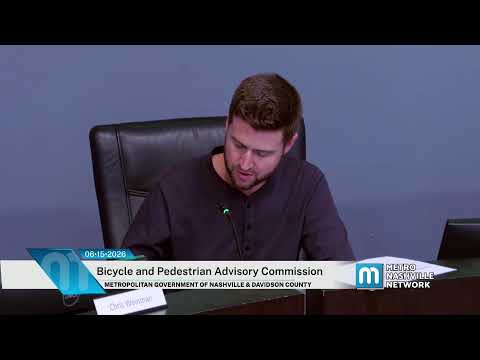
Three public commenters addressed Metro’s SUMMD/shared urban mobility device procurement during the public-comment period on June 15.
Jimmy Gilman, who identified himself as director of partnerships for Spin, told commissioners he was concerned by a recommendation in procurement materials that could lead Nashville to a sole-provider dockless model. “Competition for me is not just about choice. It's about resilience of a program,” Gilman said, arguing multiple operators drive better pricing, more investment in parking infrastructure, and better service responsiveness. He also said public reporting shows negotiations for Nashville’s docked bike program have been protracted, and that concentrating dockless and docked services with a single operator would concentrate “an extraordinary amount of risk.”
James Weaver, who introduced himself as counsel for Lime at Holland & Knight, said Metro’s Procurement Department ran a months-long process, that Lime scored highest and that a procurement committee recommended awarding Lime the contract. Weaver described political pressure and outreach by other bidders and said the procurement includes a termination-for-convenience clause that would allow Metro to undo a single-award decision on 90 days’ notice if needed.
BPAC members noted their advisory role and that the Transportation Licensing Commission (TLC) will consider awards imminently; commissioners discussed whether BPAC should offer a formal opinion but emphasized respecting the procurement process. At a subcommittee discussion earlier the group had also reviewed Spin and Lime materials and shared varied perspectives on competition vs. single-operator models.
Next steps: the procurement and award process proceeds with the TLC scheduled to convene on related matters immediately after BPAC’s discussion.