Get Full Government Meeting Transcripts, Videos, & Alerts Forever!
Get email alerts on the Land Use topic
No spam. Unsubscribe anytime.
Bowling Green adopts stricter data-center zoning after marathon public comment; proposed six-month moratorium fails
Summary
After hours of public testimony from dozens of residents, the Bowling Green City Commission adopted new zoning standards for data centers — including substantial setbacks, design and decommissioning requirements — but declined to impose a six-month pause on data-center applications.
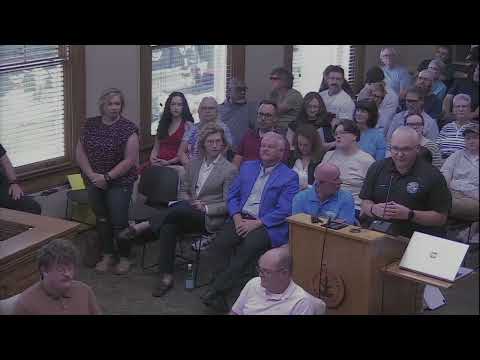
The Bowling Green City Commission on June 16 adopted an ordinance that establishes new zoning and use standards for data centers after an extended presentation by city planning staff and more than three hours of public comment from residents.
Planning director Ben Peterson told the commission the new standards require data-center buildings to sit at least 500 feet from property lines and 1,500 feet from residential districts, schools, hospitals or nursing homes; require anti-glare materials and articulated facades; restrict loading bays to side or rear facades; demand geotechnical and stormwater studies; and require a bonded decommissioning plan so sites can be reclaimed if an owner defaults. The rules also add larger setbacks for emission points and make conditional use review mandatory in certain light-industrial zones.
The planning presentation emphasized that some technical areas remain outside local land-use authority — notably utility rates and state-regulated air emissions — and said the city would rely on utility providers and state agencies for rate and air-permit matters. Peterson said the ordinance can deny any permit that fails to meet the standards and described progressive fines and, if necessary, court injunctions as enforcement tools.
Why it mattered: The data-center item drew a large turnout: the clerk recorded 33–34 public signups. Dozens of community members urged pause or stronger protections, citing evidence from other jurisdictions of well contamination, heavy water use, persistent low-frequency noise from cooling systems and generators, heat-waste impacts on vegetation, and concerns about the few long-term local jobs delivered by hyperscale facilities. Several speakers said they feared the projects would disproportionately affect rural and lower-income neighborhoods and regional farmland.
Responses from the city and others: Meredith Wilson of the Bowling Green Area Chamber of Commerce said the chamber was not negotiating with any data centers and supported proactive, evidence-based rules. City staff said no data-center application was pending; they repeatedly told the commission that, under current configuration and zoning, a data-center proposal would require public hearings and multiple interagency reviews.
Moratorium vote: Commissioners Dana Beasley Brown and Carlos Bailey proposed a municipal order creating a six-month due-diligence period to allow additional study, community engagement and a coordinated review with utilities such as Bowling Green Municipal Utilities and TVA. After discussion and a procedural vote to place the moratorium item on the agenda, the full moratorium motion failed to gain a majority.
What was approved: The commission passed Ordinance BG2026-6 (the zoning amendment package) to require the additional setbacks, design standards, utility/ infrastructure documentation and decommissioning bonds. Supporters said the package creates strong protections and a review path so the city can vet any future proposals case by case.
What remains unresolved: Speakers and some commissioners asked for clearer, enforceable limits on low-frequency noise, independent air and groundwater monitoring, and greater clarity about possible impacts on utility rates if a large load connects to the local grid. Planning staff said those items will require further coordination with utility providers and may be addressed through subsequent regulations or intergovernmental agreements.
Next step: Staff said they will continue to refine the ordinance language, work with utilities and public-works engineers on technical thresholds, and return to the commission with further recommendations. The city and county officials stressed that any site-specific proposal would have to pass additional public hearings and technical review before a permit could be issued.