Get Full Government Meeting Transcripts, Videos, & Alerts Forever!
Get email alerts on the Education Funding topic
No spam. Unsubscribe anytime.
Blue Ribbon Commission outlines school funding overhaul; Richmond council questions local impacts
Summary
Rhode Island Foundation representatives presented a consensus plan to modernize the state's school funding formula: expand the base to a "core education amount," adopt tiered weights for student needs, require a predictable local share tied to ability to pay, and increase transparency. Richmond councilors raised concerns about effects on the regional Cherokee district and transition costs.
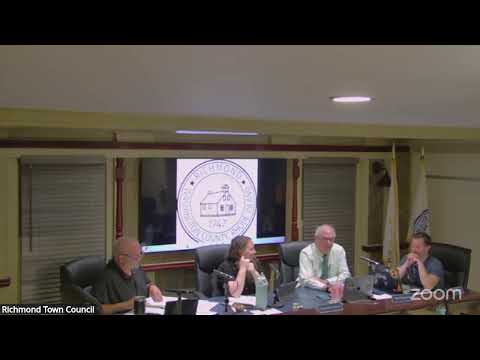
Representatives of the Rhode Island Foundation's Blue Ribbon Commission presented their year-long consensus recommendations for a modernized school funding system to the Richmond Town Council on June 16, drawing sharp questions from councilors about likely local impacts.
David Slaney, the foundation's president and CEO, explained the commission's four interlocking recommendations: (1) expand the limited instructional base to a fuller "core education amount" that includes more school costs (for example, in-district transportation and building maintenance); (2) tailor per-pupil funding with tiered weights for multilingual learners, students with disabilities and high-cost career and technical education programs; (3) require a predictable local share for municipalities based on ability to pay; and (4) strengthen transparency, budgeting support and strategic management to tie spending to student outcomes. Brenda Santos of the Annenberg Institute summarized research and the commission's consensus process.
Slaney urged that the commission's architecture should be implemented statewide rather than piecemeal: "You can't have a statewide school funding system that is fair to everyone and build into it the inequities that exist today," he said. He noted that maintaining the current state share under the new base could require hundreds of millions in additional state spending and that the general assembly will need a transition plan for affected communities.
Why Richmond cares: Council members pressed the presenters on how the proposed formula would affect the tri-town regional district (Cherokee), noting modeling showed a large apparent reduction in the district's state aid in high-level scenarios. Councilors asked about transportation costs in rural, regional districts, differences in property-value measures across municipalities, and protections (such as transition funds or phased implementation) for towns facing sudden losses.
The presenters said the general assembly has already acted to study implementation scenarios: DESE and budget officials will produce a comparative report by Oct. 1, 2026, and a special legislative commission will study feasibility, cost scenarios and transition strategies.
Next steps: The foundation and Annenberg team will work with the special legislative commission and the Department of Elementary and Secondary Education to refine modeling and transition provisions. Richmond councilors asked staff to track the legislative commission's work and flagged the need to evaluate local bridge funding options should the new formula create near-term gaps for regional districts.