Get Full Government Meeting Transcripts, Videos, & Alerts Forever!
Get email alerts on the Listings And Accountability topic
No spam. Unsubscribe anytime.
Report listing prompts questions about consequences; UN envoy says member states must act
Summary
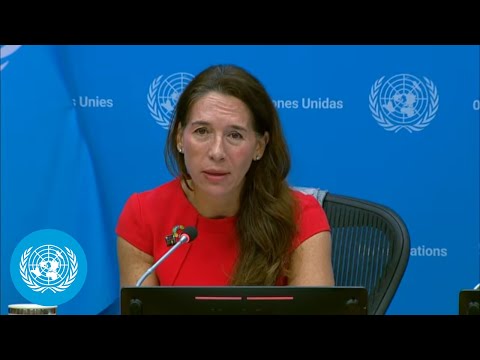
During the briefing, reporters pressed Vanessa Frasier about Israel’s listing, settler violence, and whether listings carry consequences; Frasier said listed countries receive draft findings and that consequences are decided by member states and the Security Council, while the UN provides the verified data and engages parties that are interested in commitment plans.
Reporters at the briefing asked several detailed questions about the practical consequences of country listings in the annex to the children and armed conflict report, and whether listing a state like Israel results in concrete sanctions or operational changes.
Edith Letterra of the Associated Press asked why the data showed government forces had more verified violations than armed groups and whether Frasier had spoken to the Israeli government after the report identified the Israeli Defense Forces among the top perpetrators. Frasier said listed situations receive an advanced copy of the draft report and that there is a month for states to discuss, provide alternative evidence and comment before finalization. She reiterated that the office’s role is to provide data and engage; "consequences are for member states to decide," she said.
When asked why settler actors had received warnings but were not listed, Frasier explained that listing decisions rest with the Secretary‑General and are based on criteria that include trends and patterns across years; a warning signals the opportunity for dialogue and possible commitment plans to end violations. "The focus is not reporting and naming and shaming. The focus is protecting children," she said.
Reporters challenged the notion that member states are not acting on the evidence. Frasier urged questioners to direct such political questions to the Security Council and member states, noting that her mandate is to end and prevent grave violations through engagement and by documenting verified data that others can use for accountability steps.
On benchmarks for delisting, Frasier said the mechanism is consistent across situations: a listed party may be removed after entering a timebound commitment plan whose implementation is UN‑verified. She described the mechanism as forward‑looking and operational rather than retrospective accountability. "There is one system and it is defined in UN Security Council resolutions," she said.