Get Full Government Meeting Transcripts, Videos, & Alerts Forever!
Get email alerts on the Behavioral Health Social Detox topic
No spam. Unsubscribe anytime.
Avalon proposes 4–6 social detox beds; Douglas County commissioners weigh funding, equity and capacity concerns
Summary
Avalon Wellness and Recovery asked Douglas County commissioners to consider a six‑month, $142,350 startup advance to open 4–6 social detox beds to serve people withdrawing from substances. Commissioners and nonprofit partners supported more capacity for men but raised concerns about prepayment to a for‑profit and effects on peer staff and existing nonprofits.
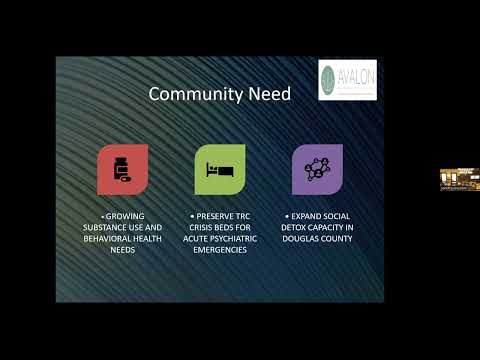
Avalon Wellness and Recovery asked Douglas County commissioners on June 17 for support to create a small social detox program intended to add 4–6 dedicated beds and reduce strain on emergency departments and the county’s Treatment and Recovery Center (TRC). Avalon executive director Ken Vic told commissioners the beds would provide 24/7 supervised residential care for people experiencing withdrawal who do not need intensive medical treatment, following ASAM guidance for social detox (ASAM level 3.2).
The proposal seeks a six‑month startup advance that Avalon summarized in the packet as $142,350, an amount the presenter said is derived from a $195/night block‑grant rate and occupancy assumptions; Avalon said it would move to reimbursement-based payments after the initial period and provide detailed utilization and demographic reporting during the pilot. "This isn't about making a profit. This is about serving the community," Ken Vic said, describing plans for warm handoffs to local treatment providers and peer support to maintain continuity of care.
Why it matters: County staff and partners said Douglas County lacks dedicated local social detox beds for men and that existing programs have left some clients sent out of county. Bob Transky, director of behavioral health projects, framed the request as a preview for the county's budget reestimate process; he and partners described the ask as an experiment to learn what capacity is needed and how referral flows should operate.
Partners, data and capacity: Local SUD partners at the meeting included Bert Nash (Kirsten Watkins), DECA (Lori Alvarado), MIR (Nick Caserona) and Heartland partners. Ryan Storch, senior director of Crisis Services, presented a 14‑day sample from TRC showing 14 individuals with a primary substance‑use diagnosis, of whom about five in that sample appeared clinically appropriate for social detox once higher‑acuity medical cases were removed. DECA’s Kim Freeze provided annual peer‑contact data for 2025: peers handled 141 calls, 76 people entered detox, 55 completed detox and 50 went on to treatment; of those contacts, roughly 30 were identified as Douglas County residents, including 16 from Lawrence.
Key disputes: Commissioners and nonprofit providers voiced two central concerns. First, several members said county practice favors reimbursement for services rather than lump‑sum advances and questioned whether a county advance to a for‑profit provider would displace nonprofit revenue or peer positions that county dollars currently support. Lori Alvarado of DECA said two peer positions are paid from county funds and could be at risk if county dollars were reallocated. "We would not be giving up our detox beds," Alvarado said, but she cautioned that peer deployment and funding lines are complex.
Second, commissioners pressed for parity and accountability: if Avalon is paid with public dollars, commissioners wanted assurance Avalon would accept the same block‑grant rate used by other public providers and that reimbursements and outcomes would be transparent. Multiple commissioners said they were open to increasing capacity for men—there are currently two women's social detox beds locally—but reluctant to approve a large upfront payment absent stronger safeguards. One commissioner summarized the majority view as supportive of continuing conversations but skeptical of a prepayment model.
Staff and partners emphasized process safeguards: Avalon said it is licensed for social detox through state authority and that it is proceeding with Medicaid credentialing; the presenter pledged detailed reporting during any pilot. County staff noted past allocations to local providers have varied year to year and reiterated the county’s preference for reimbursement-based contracting whenever possible.
Next steps: The commission took no formal action. Commissioners asked staff to convene all partners (including Lawrence Memorial Hospital and others identified as referral sources), clarify referral pathways and inclusion/exclusion criteria, outline funding options (startup advance vs. fee‑for‑service) and present refined options during the budget reestimate and 2027 budget cycle. The work session recessed at 5:30 for the business meeting.
Closing note: No vote or contract was approved; staff will return with more detailed cost, referral and outcome proposals if the commission directs in the budget process.