Get Full Government Meeting Transcripts, Videos, & Alerts Forever!
Get email alerts on the Pre Hospital Blood topic
No spam. Unsubscribe anytime.
Agency official: contract approved to begin carrying blood products on ground ambulances
Summary
An agency official said a contract has been approved to start carrying blood products on ground ambulances, with paramedic training and application approval expected in about three to four weeks; the official asserted earlier blood replacement could have improved survival in roughly 40% of past pre-hospital bleeding deaths.
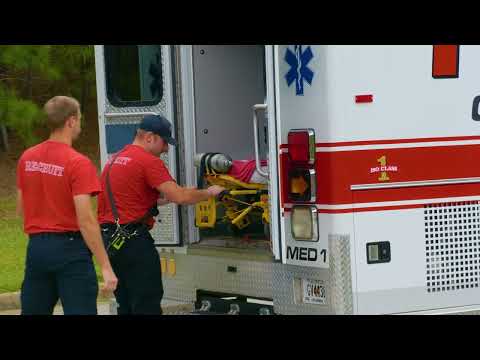
An agency official said the emergency medical service has approved a contract to begin carrying blood products on ground ambulances and expects to begin deliveries after training and regulatory steps are complete.
The official said Shepherd Community Blood Center contacted the service and Gold Cross EMS to offer supplying blood products for use in the pre-hospital environment. “The leading cause of death in [the] pre-hospital environment in trauma is uncontrolled bleeding,” the official said, and added, “About 40% of the people in the past who have died from uncontrolled bleeding … likely could have been saved had we had a better treatment modality.” The official did not cite a specific study or dataset in the remarks.
The speaker described three types of products: whole blood, plasma and red blood cells, calling whole blood “the gold standard” because it replaces volume, provides oxygen-carrying capacity and supplies clotting factors. The official said the service will likely carry plasma and red blood cells rather than whole blood.
On next steps, the official said paramedics must be trained on blood-product use and a related application must be approved before rollout. “Once we get the training and that application approved, which should be 3 or 4 weeks from now, we’ll be ready to start delivering blood,” the official said. No further procedural details, vote records or dates for application approval were provided in the remarks.
The official described the change as a major step that could extend hospital-level resuscitation into the field and predicted the practice may become standard on ground ambulances within three to five years. The presentation did not provide independent documentation for the survival estimate or specify which regulatory body would approve the application.