Get Full Government Meeting Transcripts, Videos, & Alerts Forever!
Get email alerts on the Forensics topic
No spam. Unsubscribe anytime.
Detective Kowalski: Real-life CSI relies on patience, lab work and tiny traces
Summary
On Mayor Mary Robichaux’s podcast Inside Roswell, Detective Kowalski of the Roswell Police Department’s Crime Scene Investigation unit describes how field response, in-house fingerprint services and sensitive DNA techniques differ from TV dramatizations, and urges witnesses to call 911 and avoid disturbing scenes.
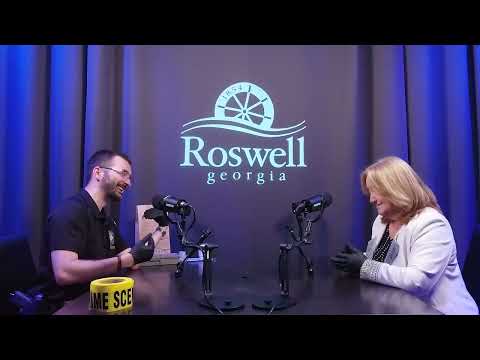
Mayor Mary Robichaux hosted Detective Kowalski of the Roswell Police Department on the Inside Roswell podcast to explain how the city’s crime-scene investigation (CSI) work operates and why it often looks different from television.
“My whole job is to try and find that which can’t be found,” Detective Kowalski said, describing physical evidence as a “silent witness” that can corroborate or contradict interviews.
Kowalski told listeners the Roswell CSI unit performs two main functions: a full field-response team that can be dispatched to anything from vehicle break-ins to multi-fatality incidents, and an in-house laboratory that handles fingerprint development, identification and some advanced DNA sampling. He said Roswell’s CSI staff are sworn police officers who carry a badge and firearm, which differs from larger neighboring agencies that sometimes use civilian crime-scene technicians.
That in-house capability lets Roswell process fingerprints quickly, Kowalski said. “We can turn around fingerprint development and identification within a matter of a couple days,” he said, while cautioning that DNA testing is slower because samples are sent to partner labs such as private providers or the Georgia Bureau of Investigation and can take months to return.
Kowalski demonstrated common tools and methods used in the field. He described magnetic fingerprint powder and a magnetic wand to develop ridge detail and explained the department photographs prints first for upload to national databases, then attempts lifts if needed. He also described an extraction device (referred to during the episode as an M‑Vac) that uses a liquid jet and vacuum to recover biological material from porous or awkward surfaces such as old textiles or rough rock.
“Because we’re getting trace DNA,” Kowalski said, “we’re going after saliva and epithelial cells and all of this low‑count DNA. As time has gone on, so has the sensitivity of testing evolved.” He added that modern methods can work with nanogram amounts of DNA and that fingerprints can sometimes persist for years if not wiped away or environmentally damaged; he cited an example of a print developed more than two years after deposition.
Kowalski also walked through bloodstain‑pattern work and a presumptive blood test, the Kastle‑Meyer (phenolphthalein) reaction, noting the technique’s long history. He cautioned that overlapping stains and environmental factors require careful interpretation and that what looks like a single stain may be multiple overlapping events.
On practical advice for witnesses and bystanders, Kowalski urged people to call 911 and follow operator instructions, and to minimize touching or moving items at a scene to preserve potential evidence. He stressed that first priorities such as rendering medical aid supersede scene preservation when needed.
The episode included discussion of the emotional toll of violent‑crime work and peer‑support resources within Roswell’s public‑safety community. Kowalski said teaching, hobbies and departmental peer support help him and colleagues manage the work’s stresses.
Robichaux closed the episode by thanking Kowalski for the demonstration and encouraging residents to subscribe to Inside Roswell for more conversations about city departments and services.
The podcast episode did not record any formal policy actions or votes; its purpose was informational and educational.