Get Full Government Meeting Transcripts, Videos, & Alerts Forever!
Get email alerts on the State Association Training topic
No spam. Unsubscribe anytime.
State consultant pitches association, short trainings to support local boards of health
Summary
A state‑contracted consultant told the Madison County Board of Health that Montana is exploring a state association of local health boards to deliver training, legal education and quick, bite‑sized modules; board members asked for communicable‑disease dashboards and better county‑commissioner engagement.
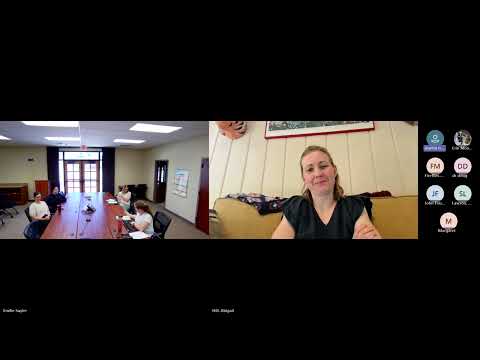
Abigail Hill, a consultant working with the Confluence Public Health Alliance and the Montana Department of Public Health and Human Services, told the Madison County Board of Health on June 16 that multiple states operate a state association of local boards of health and Montana is assessing whether a similar model could help local boards access legal guidance, training and orientation.
"The state can be delayed," Abigail said, describing the practical lag between statewide policy shifts and local interpretation. She said the proposed association would collect local training needs, partner with universities and legal experts, and produce short, focused educational materials for busy local boards and county attorneys.
Board members listed specific needs: regular, concise communicable‑disease dashboards, short modules on board governance and Robert's Rules, environmental‑health topics such as septic‑system variances, and practical budget briefings tied to county budgeting cycles. John Fountain, a retired physician, asked for a quick monthly snapshot of reportable diseases so board members can immediately spot upticks in syphilis, gonorrhea, tuberculosis or other conditions.
Abigail said models that pair micro‑training videos with convened calls including county attorneys, health officers and medical directors have been effective elsewhere. She noted legal interpretation is a recurring gap: the state cannot always provide definitive legal advice for local response (for example, school exclusion or quarantine decisions during an outbreak), and a convening that includes legal experts could speed local decisions.
Board members also raised relationship gaps with county commissioners; Sheila Lawson said she has not seen a commissioner attend a board meeting during her two years on the board and recommended joint trainings for commissioners and board members so all parties share expectations about authority, budgets and reporting.
Abigail said she will compile the feedback into a report for the state and invited board members to provide further contact information. She told the board the product of her listening tour will be shared this fall and could include short video modules, a legal‑education convening and templates to help counties standardize board agendas and disease reporting.
The board did not take formal action on Abigail's recommendations at this meeting; Abigail said she would follow up with written materials and contact information.