Get Full Government Meeting Transcripts, Videos, & Alerts Forever!
Get email alerts on the Economic Development topic
No spam. Unsubscribe anytime.
York council opens public discussion of LB840 local-option sales tax plan
Summary
City council heard a public briefing and outside panels about a proposed LB840 plan that would dedicate a portion of existing local-option sales-tax revenue to economic development; presenters from Makook and Seward described uses such as gap financing, façade work, housing and child‑care incentives, and speakers urged the council to refine funding levels before a ballot decision.
The City of York council on May 15 opened a public discussion of a draft LB840 plan, a local-option sales-tax program state statute commonly used to finance economic development projects. The council heard presentations from municipal officials in Makook and Seward and testimony from local business and development leaders but took no formal action to place a measure on the ballot.
City staff introduced a draft that uses the 2017 plan update process and described an illustrative funding level that was worked backward as an example (roughly $1 million annually based on a proposed share of the city’s 1.5 percent local-option sales tax). Staff said the start date and funding structure are flexible and that any final plan would be presented to voters in a separate ballot vote if council approves placement on the ballot.
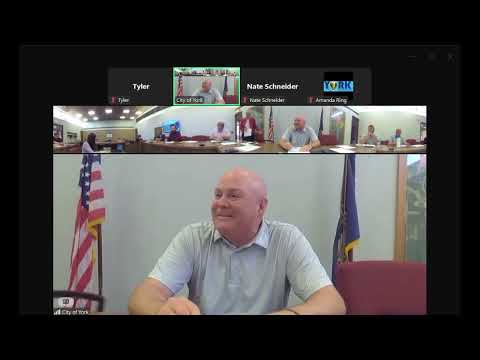
Makook city manager Nate Schneider told the council his city dedicated a portion of a local-option sales tax to LB840 in prior ballot measures and that Makook’s Economic Development Corporation manages the program subject to state requirements. “Typically the LB840 money is used as stop‑gap financing for different projects,” Schneider said, describing uses ranging from façade work and demolition of blighted buildings to housing and child-care incentives.
Megan Kaylor, representing the city of Seward and its LB840 committee, described Seward’s experience with ballot outreach and projects supported by the fund, including theater upgrades and rail campus expansion. “It just provides another opportunity for gap financing for projects to continue to be effective in our community,” Kaylor said.
Local speakers from York urged adoption of the tool. Kevin Pier, president of Anderson State Bank, and Lisa Hurley of the York County Development Corporation described examples where gap financing enabled child‑care continuity, housing projects or business succession. One business leader who previously worked on Makook’s ballot campaign recounted lengthy local planning efforts and urged York to adopt a plan that will outlast current leadership.
Councilors questioned the draft’s illustrative dollar figure and funding method, debating a percentage of sales tax versus a fixed annual amount and expressing concern about reliance on relatively new lease and occupancy revenue streams to meet high funding targets. Staff offered to compile comparative data from other Nebraska communities and to return with funding scenarios and refined language before any public hearing or ballot decision.
No ordinance or ballot question was adopted at the meeting. Councilors directed staff to return with additional information and suggested the body could hold further council-level discussion before scheduling a final public hearing and a council vote to place a plan on the ballot.