Get Full Government Meeting Transcripts, Videos, & Alerts Forever!
Get email alerts on the Civic Governance topic
No spam. Unsubscribe anytime.
Council, Ramp Commission discuss narrowing RAMP funding definition and new reporting rules
Summary
The Ramp Commission proposed changes to city ordinance and bylaws: clarifying eligible organizations’ primary purpose, adopting financial reporting thresholds aligned with Utah Code 51‑2A‑201.5, extending grant spending windows to 18 months for arts seasons, and changing application and review timelines; council asked staff to return with plain-language code edits.
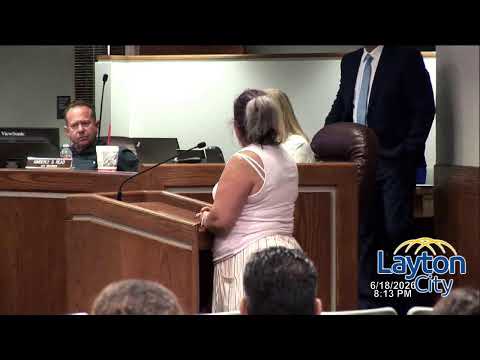
Council members spent an extended portion of the June 18 work meeting reviewing proposed changes to the city’s RAMP (recreation/arts/museum/parks) ordinance and commission bylaws. Staff and Ramp Commission representatives said the changes are intended to clarify who should receive RAMP funds, improve compliance with state law, and make administration easier for applicants.
Key proposed changes: • Add language aligning the city definition with state code to emphasize that recipients’ primary purpose should be arts, recreation, museums or parks so that unrelated businesses are not funded as RAMP organizations. Staff said they will confirm the exact state-code citations and bring precise text back for council approval. • Add financial-reporting requirements to match Utah Code 51‑2A‑201.5 so organizations receiving public funds above certain thresholds provide appropriate financial statements (ranging up to CPA‑prepared reports depending on dollar levels). • Extend the grant spending window from one year to 18 months to allow seasonal arts organizations to cover a full season within a single grant cycle; staff retained authority to grant longer extensions for multi‑year capital projects. • Clarify operating vs. capital expense definitions and permit program‑specific marketing costs tied to an authorized activity while limiting general operating subsidies. • Expand the application-review period (from two months to four months) to allow more careful evaluation.
Council members and commissioners also discussed commission meeting length and the composition of voting members (some voting seats are city staff or staff‑affiliated). Staff said the composition was originally intended to provide continuity and protect city interests; the commission agreed to explore options and return recommended changes.
Why it matters: RAMP funds represent recurring city support for cultural and recreational programming; clarifying eligibility, reporting and spending rules could shift which organizations qualify, increase transparency and reduce audit risk. Council asked staff to draft ordinance and bylaw language that reflects the commission’s intent and state-code requirements for a future meeting.
Next steps: Staff will draft plain‑language ordinance changes and a bylaw update for council review, including exact statutory citations and suggested edits on application windows, spending timelines and financial‑reporting thresholds.