Get Full Government Meeting Transcripts, Videos, & Alerts Forever!
Get email alerts on the Land Use topic
No spam. Unsubscribe anytime.
Brady family seeks planning guidance as new state rule reshapes building on class six roads
Summary
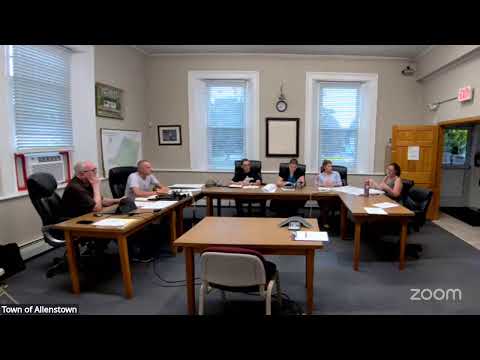
At a June 17 Allenstown Planning Board meeting, Brady family representatives outlined conceptual plans for single-family homes on several parcels and sought feedback about how a new RSA that takes effect July 1 affects building on class six roads; the board asked for a town-attorney opinion before formal action.
Representatives for the Brady family told the Allenstown Planning Board on June 17 they are exploring options to place single-family homes on several lots totaling roughly 45 acres and sought the board’s early feedback on how to move forward.
“My name is David Crystal of Manchester. I’m here this evening on behalf of the Brady family LLC,” the applicant’s representative said, presenting a 200-scale concept map and lidar-derived topography. He said the applicant was looking for guidance about what the town would want to see and what legal questions might affect development.
The conversation centered on a recently enacted state RSA that, the planner said, changes how building on class six roads is treated. The planner described a key distinction: the statute, as he understood it, addresses single houses on lots of record while full subdivisions or multi-family site plans remain subject to traditional subdivision rules and road-upgrade requirements. “I’m just a planner, I’m not an attorney,” he told the board, recommending the applicants obtain an opinion from the town attorney about the statute’s application.
Board members repeatedly asked whether multiple lots of record would permit multiple single-family building permits and whether lots without frontage (for example, lot 1091) must be merged to provide frontage before a permit could be issued. The planner said single building permits on separate lots may be treated differently from subdivisions that would require upgrading a class six road to class five and acceptance by the town.
Residents who spoke during public comment raised neighborhood concerns. Deborah Mullins of Daws Road warned of increased vehicle traffic and safety risks for children if multiple homes were added. “We see one car every hour and now we’re going to see hundreds of cars going up and down the street,” she said. Patricia Bedford asked whether wetlands or conservation restrictions would require environmental review, and staff pointed to NHDES setback rules and building-permit requirements.
Planner and board guidance emphasized two consistent points: whether the RSA’s one-home interpretation applies in this case should be confirmed by the town attorney, and any building permits for lots on class six roads will require recorded waivers clarifying that the town is not responsible for services and that applicants must maintain roads and meet access standards prior to permit issuance.
The board did not take any votes. The applicants said they would refine plans, pursue any required legal or technical reviews, and return to the board with more detailed proposals once they have a town-attorney opinion and updated plans.
The board advised applicants to specify the exact legal questions for the town attorney (for example, whether the RSA permits one house per lot of record versus multiple permits or subdivisions) and to submit escrow and application materials when ready. The Planning Board noted that subdivision rules, frontage requirements and road-acceptance rules will still apply to any proposal that rises to the level of a subdivision or multi-unit development.