Get Full Government Meeting Transcripts, Videos, & Alerts Forever!
Get email alerts on the Transportation topic
No spam. Unsubscribe anytime.
Council authorizes right‑of‑way acquisition for South Bridge project; conservation easement dispute likely to require court process
Summary
By a 4‑3 vote, Glenwood Springs council approved a resolution authorizing acquisition of rights‑of‑way (including eminent domain if necessary) for the South Bridge project. Staff said the step is needed to meet federal grant and bidding timelines; Aspen Valley Land Trust and the Jackson family asserted that a conservation easement prohibits the proposed work and that termination would require judicial proceedings.
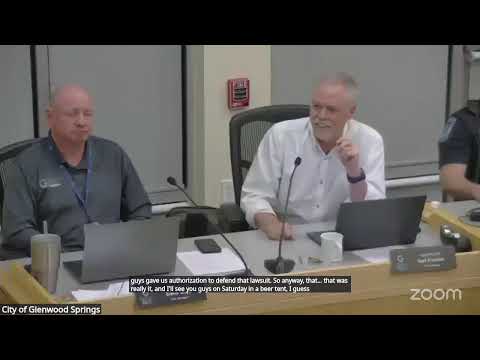
Glenwood Springs City Council voted 4‑3 on June 18 to authorize acquisition of property interests — and to use eminent domain if necessary — to clear right‑of‑way for the South Bridge project. Council and staff stressed the decision is a legally required step to meet federal grant timelines and prepare a clean bid package for construction.
City legal staff explained the two‑part condemnation process under Colorado law: (1) a council resolution authorizing acquisition for a public use (the step taken June 18), and (2) if negotiations fail, a condemnation filing in district court seeking immediate possession with value to be determined later. "If you can prove the statutory requirements, public necessity being the biggest one, the court will order possession to be vested in the public entity," city counsel outlined.
The meeting featured extended public testimony from the Jackson family and a representative of Aspen Valley Land Trust (AVLT). AVLT said it holds a perpetual conservation easement on most of the Jackson Ranch and that the easement expressly prohibits roads, bridges, grading and topographic alteration for the protected area. AVLT’s deputy director, Tory Udall, said the easement protects scenic, habitat and river‑corridor values and that termination of the easement would require judicial proceedings; AVLT urged the city to pursue alternatives or submission to a 1041 county review process.
Sandy Jackson, representing the Jackson family, described the family’s multi‑decade conservation work and asked the city to respect the easement and the family’s stewardship. AVLT warned the city could face substantial compensation claims, including valuation calculated as if the property were unencumbered, plus potential damages for harm to conserved values.
Staff argued that failing to authorize right‑of‑way acquisition would jeopardize grant obligations and push the project off the competitive schedule needed to reach a September‑to‑November bid window. Council members split on the balance between protecting conserved land and meeting project schedules. After debate, the resolution passed 4‑3.
What happens next: Staff said final offer letters would go out immediately; if negotiations break down, a condemnation action could be filed, and a hearing on immediate possession could come within weeks. Council members who opposed the resolution said they would press for alternatives and noted the long‑term conservation and community implications. Supporters said clearing right‑of‑way is necessary to keep federal funding and to give the city the option to proceed or stop once bids are known.
Why it matters: The vote starts a legally prescribed process that could lead to court proceedings if voluntary agreements cannot be reached. The dispute pits regional transportation goals, federal grant timelines and emergency/evacuation planning against private conservation commitments that many in the community view as permanently protecting the valley’s open space.