Get Full Government Meeting Transcripts, Videos, & Alerts Forever!
Get email alerts on the Housing Policy topic
No spam. Unsubscribe anytime.
Planning Board asks staff for data, requests joint meeting with Town Board on MFRBSC downtown housing draft
Summary
The Planning Board declined to endorse or reject the MFRBSC draft housing law pending more inventory and metrics, asked staff to prepare a memo listing the data and questions needed, and requested a joint meeting with the Town Board to clarify goals and incentives.
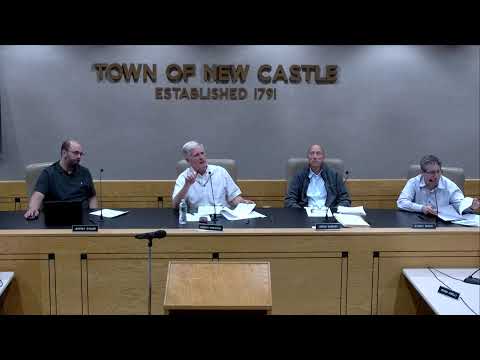
At the June 17 meeting the Planning Board discussed a referral from the Town Board on draft MFRBSC legislation intended to create incentives for multifamily/downtown housing. Board members agreed they were not in a position to support or refute the draft as written because staff had not provided sufficient inventory or metric analysis showing how different parcel-size thresholds and incentives would affect downtown capacity.
Multiple members argued the board should request a joint meeting with the Town Board to discuss policy goals, preferred housing types (for example, incentives for accessible and senior units), and the data needed to evaluate metrics such as parcel sizes and density thresholds. One member summarized the position: "We're not in position to support the law because we don't have the supporting information or the data that is attached to that decision-making," and recommended staff enumerate required studies and alternatives.
Members proposed specific edits and policy ideas to present to the Town Board: prioritize incentives for accessible and senior housing, revisit owner-occupancy requirements for accessory apartments, consider tax or application-fee incentives to help property owners pursue desired conversions, and compile an inventory of eligible lots and their potential unit yields under alternative thresholds (quarter-acre vs. tenth-acre). Several members urged the Planning Board to set clear design and livability goals rather than simply respond to developer proposals.
Staff (Sabrina) agreed to draft a response memo that (1) states the board is not positioned to support or refute the draft because of insufficient supporting information, (2) enumerates the data requested (lot inventory, potential unit counts under alternatives, photometrics or infrastructure constraints where relevant), and (3) requests a joint meeting with the Town Board. The board set an internal review timeline: staff to circulate a draft promptly and board members to provide comments by the following Monday so the memo can be finalized for the Town Board packet.
Next steps: staff will prepare the draft memo and a list of the data the board wants to see; the board asked to be convened with the Town Board for a substantive discussion of goals, metrics and incentives prior to finalizing a formal recommendation.