Get Full Government Meeting Transcripts, Videos, & Alerts Forever!
Get email alerts on the Solar Installation topic
No spam. Unsubscribe anytime.
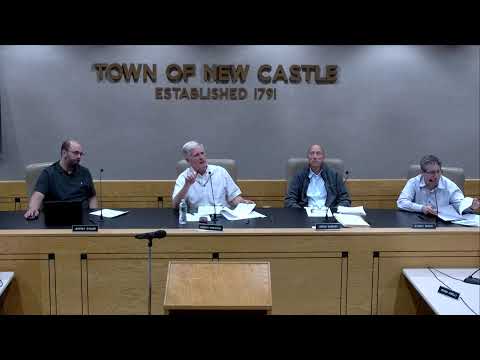
Planning board positively refers First Congregational Church solar panel plan after view-shed review
Summary
The Planning Board voted to send a positive referral to the Zoning Board of Appeals for a solar installation at First Congregational Church after a visual analysis showing mature tree screening and staff confirmation that the application meets solar code requirements.
Bill Spaulding, a local architect and member of the First Congregational Church Board of Trustees, told the Planning Board on June 17 that the church plans to install roof-mounted solar panels on its mostly flat roofs and two small gable sections and hopes to begin installation next month. "We the First Congregational Church would like to install solar panels on our mostly flat roofs on the church," Spaulding said, and walked the board through diagrams and photographs he said represented eight neighboring residential properties.
Spaulding described the system as a roughly 73 kW DC / 50 kW AC array and said panels would sit up to about 8.5 inches above the roof edge where visible. He emphasized the church property is surrounded by mature trees and described multiple photographs and view-shed diagrams intended to show that most nearby sightlines are blocked by vegetation and topography. He also said the ARB approved the design two weeks earlier and that the church expects to install panels next month if approvals proceed.
Planning staff member Sabrina told the board the application "has met with all of the requirements in the code regarding solar installations" and asked the applicant to submit the new materials to the Zoning Board of Appeals promptly because some rebates and funding deadlines are tight. Spaulding said rebates cover roughly 60% of the project cost and that the current array was sized to maximize the available program kilowatt limit. He also said six panels were relocated after a fire-department review to preserve emergency access in a fenced garden area.
Board members asked about environmental impacts and neighborhood notice. Spaulding said no trees would be removed and there would be no wetlands impacts; he added that neighbors were notified and no one objected at the ZBA appearance. When the board asked whether the project would include battery energy storage systems, Spaulding said storage was considered and rebates could have covered it but the applicant was not yet planning to add batteries.
After discussion, the Planning Board moved, seconded and voted to send a positive referral to the Zoning Board of Appeals so the ZBA can complete its final sign-off. The board’s favorable referral was a voice vote: "All in favor? Aye." The ZBA will have final authority to amend the church’s special use permit and grant any necessary site approvals.
Next steps: the applicant will submit the final materials to the ZBA for its upcoming meeting; staff urged timely filing to meet funding deadlines.