Get Full Government Meeting Transcripts, Videos, & Alerts Forever!
Get email alerts on the Education Programs topic
No spam. Unsubscribe anytime.
Verona Area School District spotlights first-year Extended Learning Pathways; presenters cite high graduation outcomes
Summary
The Verona Area School District board heard a year-one report on its Department of Engagement & Extended Learning, highlighting principal-design leadership development, a new Family Welcome Center, five pathway options and data showing 58 of 455 Verona Area High School graduates participated in Crossroads or LEAP (about 13%), with a 98% graduation rate among those participants.
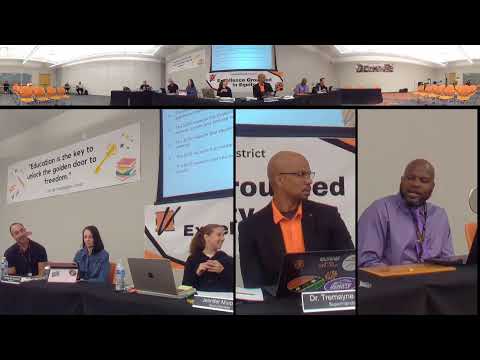
The Verona Area School District board on June 15 heard a year‑one report on its newly formed Department of Engagement & Extended Learning, which combines extended learning pathways, principal‑design leadership development and family engagement work.
Superintendent Dr. Clarity introduced the program and said the department was created to strengthen student connections and remove barriers to graduation. "We create connections, we expand pathways, and we build belonging," he told the board.
Dr. Hawkins, the department director, told the board the unit focuses on three areas: extended learning pathways, principal design (leadership development) and family and community engagement. She described five secondary pathways — Wildcat Academy (primarily ninth and tenth graders), Crossroads (11th–12th), LEAP, Reconnect (six students this year) and an elementary foundations track — all intended to keep students connected and moving toward graduation.
District presenters highlighted outcomes from the 2025–26 year: Verona Area High School reported 455 graduates; 58 graduates had participated in Crossroads or LEAP, a roughly 13% participation rate, and program staff reported a 98% graduation rate for students who went through those specific pathways. "These students all needed something different," Dr. Clarity said, noting the programs offered supports that enabled those students to finish.
Kristen Thompson, a school psychologist at Stoner Prairie Elementary and a principal‑design participant, described the principal‑design program as an "intentional development" pipeline that pairs on‑the‑job support, reflection and monthly professional learning. "You're constantly saying why did you do that?" Thompson said. "The reflection is really really powerful."
Extended‑learning teacher Isaiah Crowley told the board the pathways give students agency and serve as a wellness and SEL hub. He described the model as a "grounding spot" where students can check in or celebrate successes and said staff use a course‑stitching platform to maintain rigor and fidelity.
Presenters also emphasized family engagement work. Miss Stanley said the district hosted four family gatherings averaging 40–50 attendees, offered childcare and dinner to reduce barriers to participation, and opened a Family Welcome Center at the high school that provides supplies, limited food assistance and resource navigation. "Approximately 75 students visit the welcome center each week," she said.
The board heard video and in‑person testimonials from program participants. One parent described struggles with learning barriers and losing a sibling, and said the pathway program "allowed me to learn at my own pace" and feel supported. Recent graduate Rick Hulkins credited Crossroads, LEAP and staff compassion for helping him graduate and urged continued board support for the pathways as a lifeline for students who need a different approach.
Board members asked logistical and policy questions — for example, whether principal‑design participants must hold administrative licensure to stand in for a principal. Presenters said the district prefers licensed staff to serve in an acting principal role but also offers the program to staff exploring leadership, including those working toward licensure.
Why it matters: Board members framed the report as part of the district's equity framework and strategic priorities, noting that the pathways and family supports target students who may otherwise fall out of the traditional system. The board did not take additional formal action on program expansion at this meeting; presenters asked the board to continue supporting the department as it matures.
The board moved on to other agenda items after a roughly hour‑plus presentation and testimonial segment. The district said it will share additional metrics and timeline details as the department continues to develop.