Get Full Government Meeting Transcripts, Videos, & Alerts Forever!
Get email alerts on the Sixth Grade Move topic
No spam. Unsubscribe anytime.
Arlington ISD board OKs planning to move sixth grade to junior high, with safeguards and phased timeline to be developed
Summary
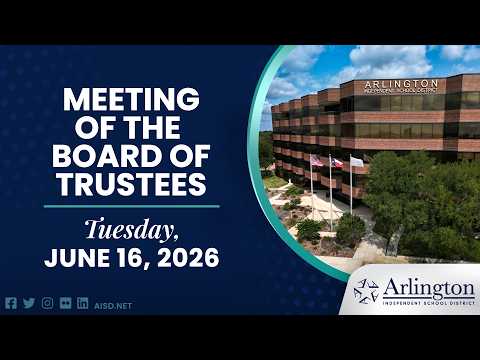
After months of study and wide public comment, the Arlington ISD Board voted 5–4 June 16 to direct staff to plan a districtwide transition of sixth grade to junior high. Trustees emphasized phased implementation, campus‑by‑campus readiness, protections for at‑risk students and a public engagement plan; the board did not set a firm start year.
The Arlington Independent School District board voted 5–4 on June 16 to begin planning a districtwide shift that would place sixth grade in junior high campuses, directing staff to develop a phased, campus‑sensitive implementation and public engagement plan.
The recommendation followed a months‑long stakeholder study focused on student experience. "The committee recommends transitioning sixth grade students to junior high through a systemwide executable plan that's graceful, purposeful, and collaborative," said Dr. Champion, who led the exploratory effort. The committee cited potential instructional alignment, expanded elective and fine arts access, and more efficient use of space as benefits of the move.
Why it matters: trustees and parents framed the debate around two linked goals — protecting core instructional time for younger learners and planning facilities amid ongoing enrollment declines. Superintendent Dr. Smith told the board the district needs a clear long‑term placement for facilities planning. "We have to ask ourselves, what do we want for the sake of our students as the district evolves," he said, explaining that staff were asked to study the question first from the student‑experience lens.
Public comment at multiple meetings and during the June 16 open forum was dominated by parents urging delay, broader districtwide input and more data on academic impacts. Meredith Wages, a public commenter, asked trustees to "pause before making any final decision on moving sixth grade to middle school" until parents, teachers and students across the district are heard. Other parents raised concerns about whether focus‑group student input was representative, traffic and safety at specific feeder patterns, and the potential loss of core instructional minutes if electives are added.
Board direction and next steps: the motion approved June 16 does not set an implementation year; trustees asked staff to return with a detailed transition plan and timeline. Several trustees recommended a phased approach that would allow some campuses that are ready to shift earlier and others to transition later. Trustees and staff emphasized safeguards that planners must include: campus‑level readiness checks, detailed attendance‑zone analysis, teacher certification and staffing plans, protected math and reading instructional time, counseling and social‑emotional buffers for younger students, and a public communications cycle.
Trustee responses: supporters argued the district already has junior high campuses (including pilot programs where sixth graders attend) that show the model can work when implementation is intentional. Trustee Justin Chapa, who moved the motion, said the committee’s student‑centered focus was the right approach and that the board must decide long‑term campus placement to inform capital and staffing plans. Opponents stressed risk to learning and social‑emotional development and cited other districts that paused or reversed similar changes; Trustee Wilbanks said he would vote no because of the academic and social‑emotional risks but pledged to support successful implementation if the board moved forward.
What the board will review next: staff said they will return with phased implementation options, stakeholder engagement plans and measurable benchmarks for academics and social‑emotional outcomes. The board asked that staff ensure teachers and families have a measurable voice in design and that special education, bilingual and at‑risk student needs be explicitly addressed. Trustees signaled they expect repeated board briefings and community forums before any classroom moves are scheduled.
The board’s decision creates a formal path to redesign middle‑grade structures across the district but leaves key choices — a firm start year, precise phasing and campus‑level readiness thresholds — for future board consideration and public review.