Get Full Government Meeting Transcripts, Videos, & Alerts Forever!
Get email alerts on the Industrial Zoning topic
No spam. Unsubscribe anytime.
BMZA approves Clean Harbors’ conditional use for resource recovery at 1700 Ridgely Street
Summary
The BMZA voted to adopt Planning Department findings and tentatively approved a conditional use allowing a resource recovery facility and solid-waste acceptance operation at 1700 Ridgely Street in the I-2 district; the board found the proposed shredding operations would be outside the critical area and would not remain on site overnight.
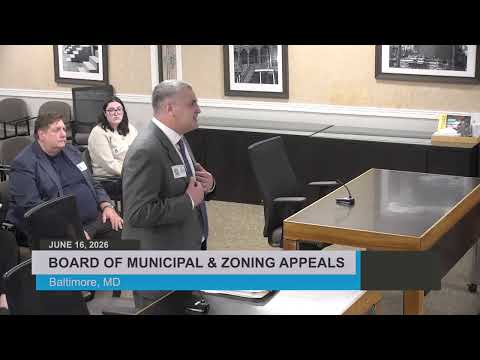
On June 16 the Board of Municipal and Zoning Appeals voted to adopt Planning Department findings and tentatively approve a conditional use for a resource recovery and solid‑waste acceptance facility at 1700 Ridgely Street.
Planning staff described the site as approximately 2.5 acres in an I‑2 industrial zone and explained that a resource recovery facility is defined in the zoning code as an operation that processes solid waste to produce resources (such as steam, electricity, or resource‑derived fuel) and achieves at least a 50% volume reduction. Planning recommended approval of the conditional use and explained that the zoning code provides an exemption so the critical‑area prohibited‑use standard does not bar the use where the underlying I‑2 district allows it as a conditional use.
Applicant counsel Sarah Noe (Ballard Spahr LLP) and Clean Harbors representatives described the proposal to manage off‑spec consumer products, install two shredders and a mixing tub, and remove shredded material from the site the same day. Peter Brigida of Clean Harbors said the company has operated in Baltimore for decades and emphasized same‑day removal of shredded material and routine transport through existing roadways.
Board members asked several questions about whether materials would at any time remain within the critical area or be staged on site; applicant counsel asked the board to find that the facility’s operations and shredder footprint are outside the critical area and described the awning and building layout. The chair proposed adopting planning’s findings and making a threshold finding that critical‑area regulations did not apply to the proposed operations. Board members indicated unanimous support at the hearing.
As with the other docket items, the board’s vote at the hearing is provisional; a written resolution explaining findings will be drafted and provided to the applicant and those who signed in.