Get Full Government Meeting Transcripts, Videos, & Alerts Forever!
Get email alerts on the Education Assessments topic
No spam. Unsubscribe anytime.
York committee highlights assessment gains and approves middle-school schedule, MTSS rollout
Summary
School leaders presented end-of-year assessment results and a middle-school schedule redesign meant to expand instructional time and MTSS supports; principals credited new intervention roles with measurable gains, while the committee set a summer retreat and approved related staffing plans.
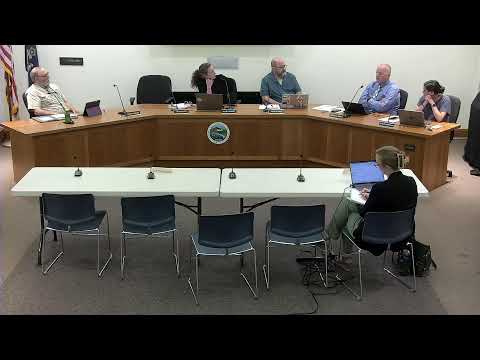
York — School leaders on June 17 told the York School Committee that districtwide assessment data, targeted intervention staffing and a redesigned schedule at York Middle School aim to improve student outcomes across the district.
During a 45-minute presentation, principals from Village Elementary, Coastal Ridge, York Middle School and York High described growth on multiple measures and the next steps for interventions and grading. Village Elementary principal Jay Dalahanty said students who attended the district’s pre‑K performed better on the DIAL‑4 screening, noting the cohort’s “total was about 13% higher, almost 14% higher,” compared with peers who did not attend pre‑K in the district.
Coastal Ridge principal Michael Harris credited a recent MTSSB (behavior specialist) hire and deeper MTSS implementation for improved I‑Ready and ALO results and reduced chronic absenteeism at his school. “We were able to bring that number down,” Harris said of Coastal Ridge’s chronic‑absence rate and described new referral and problem‑solving protocols to identify students earlier.
York Middle School principal Tim Hel outlined a collaborative schedule redesign intended to increase instructional time, restore team‑based middle‑school structures and add a daily CAT block for targeted supports. “Our goal was to implement a new master schedule by the beginning of the 2026–27 school year,” Hel said, describing added teacher collaboration time and new graded allied‑arts options (for example, digital civics and beginner piano).
Assistant principal Tisha Kupta summarized grading changes being piloted at YMS: formative assessments will be incorporated into trimester grading alongside summatives, reassessment parameters will be defined, and narrative comments will report habits of work. “Summatives still carry more weight because they’re the complete student learning summary,” Kupta said, while noting the committee intends to preserve standards‑based rigor.
MTSS co‑chair Dr. Deb Ner urged phased implementation and professional learning, saying schools typically need “three to five years” for a fully functioning MTSS system and that consistent entrance/exit criteria and meeting protocols are critical.
The committee praised the longitudinal approach and approved next steps for summer planning, including setting a July retreat date and continuing recruitment for MTSS and intervention roles. Several board members said the evidence of targeted growth justified the staffing investments but asked staff to return with disaggregated data (by subgroup and grade) in future presentations.
What’s next: the committee asked administrators to provide more subgroup breakdowns and to report early in the 2026–27 year on how the new YMS schedule and MTSS practices affect student outcomes and attendance.