Get Full Government Meeting Transcripts, Videos, & Alerts Forever!
Get email alerts on the Library Renovation topic
No spam. Unsubscribe anytime.
La Grange library seeks funding to complete phase‑three renovation, cites $200,000 annual rent
Summary
Representatives of the La Grange Library Association updated the town board on summer programs, budget details and a planned phase‑three renovation that would open non‑fiction stacks, add teen space and expand the community room; they said a New York State construction grant will determine whether construction begins this year or next.
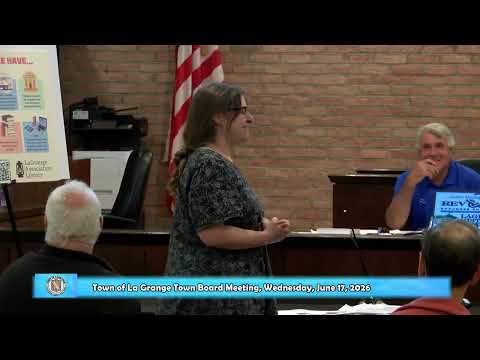
Anna, a representative of the La Grange Library Association, told the La Grange Town Board on June 17 that the library is planning a phase‑three renovation to create a teen space, expand the community room and open previously closed non‑fiction stacks.
The presentation, given during the board’s regular meeting, outlined the library’s 2026 budget and operating challenges, including rent and lost passport revenue. Anna said acquisitions account for about 10.2% of the library’s budget, fundraising expenses are about 0.1%, programming and miscellaneous costs about 9.3%, personnel roughly 53.9%, and operations and maintenance about 26.4%. She said the library currently pays “close to $200,000 a year in our rent.”
The renovation plan would convert a staff‑only stacks area into public browsing, create a dedicated teen hangout, expand the community room to host larger programs and add an art wall to showcase local artists. The library association has completed two phases of work and is now fundraising for phase three; Anna and Suzanne, the library board president, said they are working with architects and hope to hear later this year on a New York State construction grant that would determine whether construction begins late this year or early next.
Anna also described services and revenue changes that affect the library’s operations. She said the library previously offered passport processing and that service generated an estimated $50,000–$60,000 a year in revenue; changes at the State Department ended that revenue stream. The library still provides free notary services and maintains digital offerings such as Libby and Hoopla and museum‑pass lending for residents.
Town board members and attendees responded with praise for the library’s programs; multiple board members encouraged residents to visit, take tours and support fundraising efforts. The board did not take any formal action on the renovation at the meeting; Suzanne said the project timeline depends on the state grant decision.
The library invited residents to contact its listed email for tours and to follow upcoming announcements about the grant and construction schedule.