Get Full Government Meeting Transcripts, Videos, & Alerts Forever!
Get email alerts on the Stormwater topic
No spam. Unsubscribe anytime.
Residents press township on Oyster Mill runoff as stormwater authority reports compliance and warns of DEP permit changes
Summary
Residents showed video evidence of sediment-laden runoff on Oyster Mill Road and pressed the board for inspections and timelines as township stormwater staff reported compliance with pollutant-reduction goals, outlined multi‑million-dollar projects and warned of an impending shift in DEP rules from pollutant to volume control.
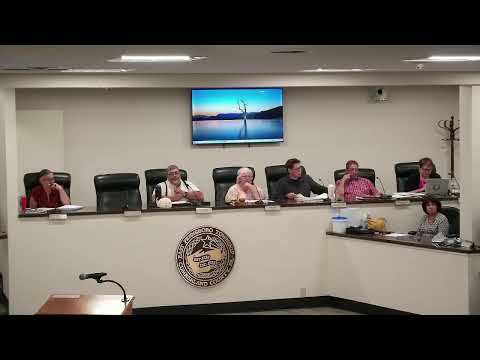
Residents and township staff exchanged sharply focused public-safety and infrastructure concerns over stormwater runoff at the East Pennsboro Township commissioners meeting on June 17, 2026.
Amy Buckheimimer, 1097 Oyster Mill Road, showed a short video recorded during a half‑inch rainfall that she said documented sediment flowing from newly constructed townhomes into roadside inlets and eventually the creek. She told commissioners the sediment deposits now extend “several feet” from stream banks, blocking access and threatening bank stability near homes, and asked the township to inspect the sites and prioritize repairs and oversight rather than relying solely on plan approval.
In response, staff said the developer was working to address required repairs and that duties of the township engineer were temporarily assigned to CSD Davidson while the township seeks a permanent engineer. Staff explained that enforcement is handled on a case‑by‑case basis under township ordinances and that the township responds to complaints submitted through its stormwater hotline.
That exchange followed a broader MS4 (Municipal Separate Storm Sewer System) presentation by Mr. Myers, who gave the board an annual status update on stormwater management. He said the township tracks roughly 371 outfalls and that a third‑party partner, Land Studies, inspected about 76 of 166 known basins in an initial phase with generally favorable findings.
Myers listed current and planned projects, including the Inola Run stream restoration — an approximately $1.7 million effort funded in part by about $710,000 in grants and a pending PENNVEST loan to cover roughly $900,000 — plus roadway stormwater repairs tied to resurfacing (about $586,000) and a 3,000‑foot pipelining project estimated at $560,000. He said the stormwater authority’s 2025 fee was increased from $22 per quarter to $34 per quarter after revenues lagged expenditures, and presented a breakdown showing 2025 revenue of about $2.4 million against expenses near $2.6 million.
Myers told the board the township has met its pollutant‑reduction plan target (313,477 pounds of sediment removed, with proportional nitrogen and phosphorus reductions) and will file the required annual report by Sept. 30 for the water year. But he warned of a pending, substantial change in Pennsylvania Department of Environmental Protection (DEP) requirements: the next permit rewrite appears likely to emphasize volume control (reducing runoff volume and peak flow rates) rather than the historical pollutant‑removal metric. That shift, he said, will require the township to rework modeling, ordinances and project selection.
Commissioners and residents pressed Myers on what the volume focus would mean for water quality. Myers and staff said the DEP rationale is that controlling volume effectively reduces the physical transport of sediment and associated pollutants, but the township must await final permit text and guidance before committing to specific projects or timelines.
Residents were directed to the township stormwater contact points — the main phone number with an option for stormwater concerns and an email address — and told that staff triages complaints, conducts inspections as warranted, and factors public‑safety and the greatest demonstrated need into project prioritization.
The board did not take action on new stormwater policy at the meeting; next steps noted were continued inspections, completion of the authority’s planned capital projects as funding permits, and monitoring DEP rulemaking to adapt the township’s controls and project priorities.