Get Full Government Meeting Transcripts, Videos, & Alerts Forever!
Get email alerts on the Water Rights Orphaning topic
No spam. Unsubscribe anytime.
Committee advances amendments to prevent "orphaned" irrigation rights when land is subdivided
Summary
Irrigation districts told the Joint Agriculture Committee June 11 that subdivisions and annexations can leave water rights unused or "orphaned." The committee accepted proposed amendment concepts and asked LSO to draft formal language and analyze legal and insurance implications.
CHEYENNE — The Joint Agriculture Committee moved forward June 11 on proposed statutory language aimed at preventing irrigation water rights from becoming "orphaned" when irrigated land is subdivided or annexed.
Keith Kennedy of the Wyoming Association of Irrigation Districts and Rick Herman, vice chair, presented an informal draft that would require water‑rights conflicts tied to a land division to be resolved at the time of the subdivision application. Herman said some Bureau of Reclamation contracts constrain districts — for example, a contract clause precludes delivering district water to multiple parcels under 10 acres — so land division can make irrigation delivery legally impossible unless rights and parcel sizes are aligned.
Brandon Gart, Wyoming State Engineer, summarized prior work (2021–22) tightening subdivision handling of water rights and described four statutory paths an applicant may use when irrigated lands are divided: voluntary abandonment of rights, change of beneficial use or place of use, a petition to the board of control to move rights, or distribution of rights within the new development. The districts' proposal would add a required step: irrigation districts be consulted and any conflicts be resolved before final subdivision approval.
Producers and landowners with experience relocating rights urged simplification of the administrative path. Kelly Kennedy (Wheatland area) described a multi‑year effort to relocate direct‑flow rights to a new pivot — a process she said was expensive and slow — and urged statutory clarity so rights can be kept in productive use within the state.
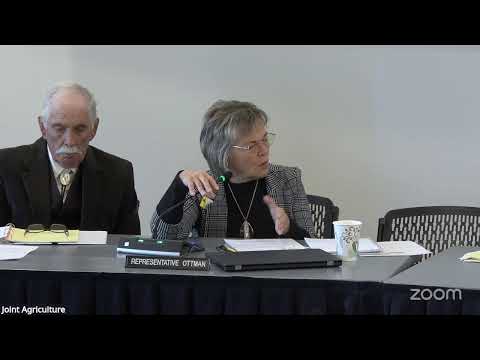
After discussion, Representative Otman moved and Representative Stro seconded the committee's conceptual approval of irrigation‑district consultation and conflict‑resolution language. The committee voted to adopt the amendment concepts and directed the Legislative Service Office to produce formal draft language and to return with analysis of legal ramifications and insurance implications. Committee staff also were asked to consider a 60‑day window for district response and a district‑court avenue for unresolved disputes.
The committee left the record open for further technical drafting and scheduled additional follow‑up at the next interim meeting.