Get Full Government Meeting Transcripts, Videos, & Alerts Forever!
Get email alerts on the Veterinary Practice Pregnancy Testing topic
No spam. Unsubscribe anytime.
Wyoming lawmakers weigh whether non-veterinarians should perform livestock pregnancy testing
Summary
At a June 11 Joint Agriculture Committee hearing, veterinarians urged lawmakers to keep pregnancy diagnosis within licensed practice; ranchers and some farm groups urged options for trained technicians and more rural-veterinarian recruitment. The committee asked staff to research certification models and insurance implications.
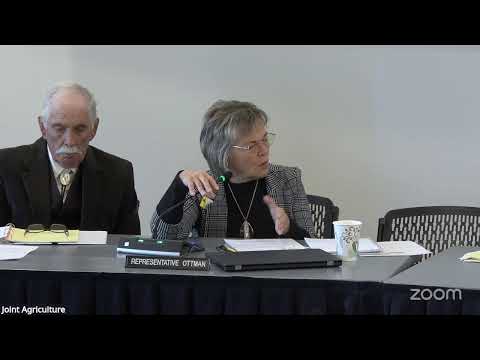
CHEYENNE — The Joint Agriculture Committee spent its June 11 interim meeting in a lengthy debate over whether people without veterinary licenses should be allowed to perform pregnancy testing on livestock, with veterinarians arguing the procedure is a medical diagnosis and producers pressing for more local options and training.
Chairman Banks opened the meeting with a reminder that the conversation was not intended as an attack on veterinarians, then asked the Legislative Service Office to outline the law. Anna Johnson, LSO staff attorney, told the panel the Wyoming Veterinary Practice Act defines the practice of veterinary medicine to include diagnosis and pregnancy testing and requires a licensed veterinarian for veterinary practice, with limited owner/employee exceptions. She said it is unclear whether compensated non-veterinarian pregnancy testing would fit existing exceptions and that violations are misdemeanors enforceable by board action or injunctions.
Representatives of the Wyoming Board of Veterinary Medicine and practicing veterinarians urged lawmakers to treat pregnancy diagnosis as a regulated clinical act. "Pregnancy is a diagnosis and therefore falls under the practice act and should be performed by a licensed veterinarian who has oversight by the Wyoming Veterinary Medical Board," said Dr. Osborne, a board member and private practitioner. Multiple veterinarians described how pre-checking often reveals broader herd-health problems — infectious disease, nutritional or reproductive disorders — and said their work protects both animals and the food chain.
Veterinarians also described economics and workforce realities. "Prechecking takes up about 75 percent of my income in the fall," said Dr. Brook Hirsch, a Fremont County mobile practitioner, adding that revenue from prechecks supports year‑round services, emergency response and medicines carried on service trucks. Several witnesses warned that allowing a new class of unregulated providers could undercut rural veterinary practices, making it harder to recruit and retain mixed‑animal veterinarians in Wyoming.
Ranchers, producers and some farm groups presented a contrasting view: that trained technicians or certified lay providers could increase local access, especially where travel distances and scheduling make veterinary service difficult. "If you open this up to where anybody can precheck a cow, you're going to take work away from the vets," rancher Dustin Taylor testified, "and I think that would exacerbate the shortage" — a concern echoed by vets — but other ranchers said they sometimes rely on local non‑veterinarians simply because a vet is days or weeks away.
Wyoming Veterinary Medical Association leaders told the committee they are pursuing recruitment and training measures to address shortages. Dr. Joe Dona described a recently passed 2026 budget amendment that funds up to five positions at Kansas State University (or another accredited veterinary college with a rural program) to produce rural‑focused graduates, and WVMA-funded externships to expose students to Wyoming practice. He warned that non‑veterinarian pregnancy testing could reduce rural clinic income and jeopardize such programs.
Committee members pressed witnesses on options short of a ban: tighter statutory clarification that owners may test their own livestock, supervised models where technicians work under veterinarian oversight, or a community‑college or vendor‑led certification program. A number of witnesses and producer groups recommended exploring a supervised, mid‑level practitioner or certified technician model rather than permitting unregulated, for‑hire lay palpators.
The committee did not vote on a bill. Lawmakers directed legislative staff to return with options: models of technician certification or supervised practice used in other states, likely statutory language, and an insurance/risk analysis to clarify liability and consumer‑protection questions. Several committee members said they want the state to continue funding recruitment programs (loan‑repayment and training partnerships) as a parallel strategy.
The exchange underscored competing priorities: veterinarians and public‑health advocates emphasized diagnosis and oversight; producers emphasized access and local jobs. The committee scheduled follow‑up work and asked LSO to present concrete statutory and programmatic options at a future meeting.