Get Full Government Meeting Transcripts, Videos, & Alerts Forever!
Get email alerts on the Small Business Support topic
No spam. Unsubscribe anytime.
Cherokee Nation spotlights TARO, opportunity-zone loans and training to boost Native businesses
Summary
Deputy Secretary of State Canaan Duncan and entrepreneur Dylan Springwater told a Cherokee Nation podcast that the tribe’s Tribal Employment Rights Office (TARO), coupled with opportunity-zone tools and roughly $80 million in SSBCI funds, is expanding access to contracts, loans and workforce training for Native-owned firms.
Cherokee Nation Deputy Secretary of State Canaan Duncan said the tribe is expanding programs to help Native-owned businesses win contracts, access low-cost capital and find trained employees.
"TARO . . . makes sure anytime we have a job that's going on that Native-owned companies have preference in doing those jobs," Duncan said on the Cherokee Nation podcast Views from the Rez. He said the tribe now counts more than 1,000 TARO vendors as it undertakes a large wave of capital improvements.
The episode centered on how the tribe combines procurement preferences with financing and workforce programs. Duncan described Cherokee Nation’s version of opportunity zones across a 14-county reservation area, set using about a 19% poverty threshold, and said the tribe has coupled those designations with the Cherokee Nation Economic Development Trust Authority and state SSBCI funds to create loan and grant support. "We have about $80 million in grant, loan funds to give out," Duncan said, describing low- or no-interest financing meant to help vendors take larger jobs.
Dylan Springwater, a Cherokee entrepreneur who owns Springwater Outdoor Solutions and related businesses, cited those supports as central to his growth. He said Cherokee Nation helped his family front materials on an early fence contract and later assisted him in 2018 with a loan that allowed him to move his lawn business from part-time to full-time. "They helped me get a loan to start my lawn business full-time," Springwater said. He added that he has since repaid the loan.
Springwater also described using Cherokee career services and on-the-job training programs to hire and train workers. He estimated his operations now employ roughly 30 people and said "we got to be at least 75% Native," reflecting the emphasis on local hiring.
Duncan said incentive packages are available to non-tribal firms as well when those firms will hire Cherokees and make a measurable impact in communities such as Cherry Tree and Halbert. To address employer concerns about labor supply, the tribe pairs hiring incentives with work-experience and on-the-job training, sometimes subsidizing wages while workers are trained.
The guests described community development as a holistic effort that pairs infrastructure investment (community buildings, playgrounds, ball fields) with economic opportunity so residents see sustained change in places long overlooked. Duncan and Springwater cited the renovated Greasy softball field as an example: Cherokee vendors ran the job, local youngsters used the field immediately and the site hosted a tournament soon after reopening.
Both guests also offered advice for aspiring entrepreneurs: Springwater urged patience, steady work and avoiding short-term underbidding, while Duncan encouraged service "from a place of love" and leaning on community networks.
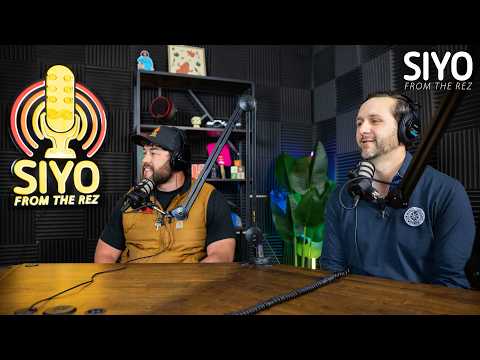
Views from the Rez recorded the episode at the WW Keeler Tribal Complex in Tahlequah on the Cherokee Nation reservation. The Cherokee Nation podcast asked listeners to subscribe and to send story tips to podcast@cherokee.org.