Get Full Government Meeting Transcripts, Videos, & Alerts Forever!
Get email alerts on the Fleet Management topic
No spam. Unsubscribe anytime.
Commission authorizes taking possession of eight patrol vehicles while evaluating leasing offer
Summary
The commission voted to take possession of eight contracted law-enforcement vehicles with a 60-day window to finalize payment while officials study an Enterprise leasing proposal that could change the county’s vehicle lifecycle and maintenance model; the sheriff cited immediate fleet shortages and projected savings if local onboarding is used.
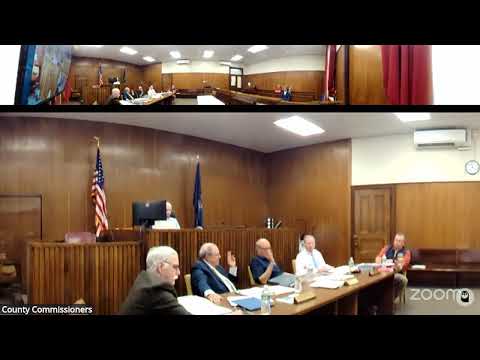
The Penobscot County Commission voted to take possession of eight law‑enforcement vehicles the county had contracted to buy, granting a 60‑day grace period to decide how the purchases will be financed.
Sheriff said the county’s spare fleet had been strained by wrecks and maintenance problems and urged quick action. "We are hard up for the money," the Sheriff said, describing recent crashes and repairs that left the office short on spares. He told commissioners Colonial (the dealer) had asked the county to take possession and that a 60‑ to 90‑day window would give the county time to complete an RFP or negotiate a leasing agreement.
The Sheriff described a leasing model presented by Enterprise that would let the company buy the vehicles, defer some payments, and manage resale to capture higher residual value. He told the commission that moving local onboarding tasks to the dealer could save about $34,000 on the current purchase package and that Enterprise’s model would retire vehicles earlier to maximize resale value.
Commission discussion focused on tradeoffs between the county’s historical buy‑and‑keep approach and the leasing alternative. One commissioner asked whether the sheriff had evaluated how the leasing model affects maintenance responsibility; the sheriff said some maintenance could be taken on by the leasing partner but local vendors remain options for service. Another commissioner noted the need to educate budget and oversight committees on the model’s long‑term costs and benefits.
Commissioners approved a motion to take possession of the eight vehicles, carried by voice vote. The motion authorizes the sheriff’s office to accept the vehicles from Colonial with a 60‑day period to determine financing (RFP, lease negotiation, or payment out of approved funds). The commission recorded no roll‑call tally in the public transcript beyond the motion carrying.
Next steps: staff will return with financial options within the 60‑day window and, if the commission directs, run an RFP or negotiate a sole‑source arrangement with Enterprise. The commission’s decision allows the sheriff to proceed with vehicle onboarding to address immediate operational gaps.