Get Full Government Meeting Transcripts, Videos, & Alerts Forever!
Get email alerts on the Workforce Vacancies topic
No spam. Unsubscribe anytime.
Pacific Grove report: 24 separations in 2025 and police vacancy strain highlighted at AB2561 hearing
Summary
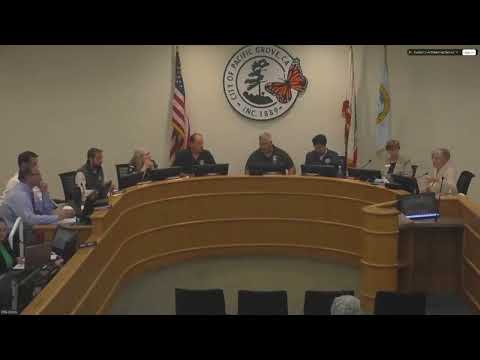
At a June 17 public hearing required by AB2561, city staff reported 24 separations in 2025 and an overall vacancy rate of 12.53%. Unions and the police officers association told council chronic vacancies—especially in the police and community development departments—are reducing service capacity and increasing workloads.
City staff on June 17 told the Pacific Grove City Council that, under AB2561 reporting for calendar year 2025, the city recorded 24 employment separations — 15 resignations, five retirements and four involuntary separations — producing an annual average vacancy rate of 12.53%.
The presentation by staff broke vacancies down by department: the police department accounted for the largest share, followed by public works, community development and library positions. Staff cautioned that the city’s creation of three new positions (urban forester, CIP manager and deputy city manager) and conservative holds on some positions to save costs both contributed to the measured vacancy rate while recruitments were open.
The hearing drew multiple employee representatives and union leaders who urged the council to treat retention as an investment. “Every time an experienced employee leaves, the city loses valuable institutional knowledge,” Nathan Porches, vice president of the General Employees Association, told the council. Garrett Macau, president of the General Employees Association and an associate planner with the city, described chronic understaffing in the Community Development Department and frequent turnover in director and senior planner roles.
Police Officers Association leaders pressed a separate operational point: the department is authorized for 20 full officers on paper but not all authorized positions translate into deployable officers because of training, leave, injuries and administrative assignments. Paul Nagamina, president of the Pacific Grove Police Officers Association, cited monthly deployment figures showing the number of officers meeting the definition of “fully deployable” fell from about 15 early in 2025 to as few as 11 in some months. “That is not acceptable,” he said, arguing the shortfall increases overtime, reduces training and affects morale.
City staff reviewed recruitment and retention strategies included in the AB2561 presentation: expanded outreach, an employee referral program, improved applicant communications, streamlining hiring steps where regulatory compliance permits, targeted recruitment webpages for seasonal/younger applicants, and retention investments such as training, leadership development and alternative work schedules. Staff also highlighted that specialized police hiring steps — background investigations and physical assessments — can take several months and affect timing for fully deploying recruits.
During public comment residents and staff linked recruitment difficulties to regional housing costs and a tight local labor market, urging the council to weigh salary competitiveness alongside long-term fiscal constraints. Council members acknowledged the challenge and received the report for consideration in upcoming fiscal sustainability discussions.
Next steps: Council received the AB2561 report; the city said it will continue recruitment and retention work and incorporate those efforts into an expanded fiscal sustainability review planned for August–September council work and a deeper budget conversation beginning July 15.