Get Full Government Meeting Transcripts, Videos, & Alerts Forever!
Get email alerts on the Police Recruitment topic
No spam. Unsubscribe anytime.
Consultants say chief candidate pool is thin; committee weighs interim chief, regional options
Summary
Consultants told a Hinesburg–Richmond committee that finding a permanent police chief to oversee both towns would be difficult because the candidate pool is thin; they recommended hiring an interim "transitional" chief or administrator while the towns sort governance and pursue longer-term regional solutions.
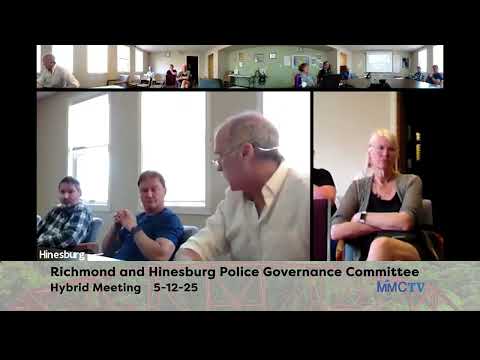
At a joint meeting on the towns' police chief recruitment process, consultants Jim Baker and Julie Scribbner told Hinesburg and Richmond officials that recruiting a permanent chief who would cover both towns is unlikely given a thin candidate pool and current staffing shortages.
"The pool of candidates are very thin," said Jim Baker, a former Vermont state police colonel who now consults on police executive searches. Baker said it would be “almost a fool’s errand” to advertise for a single chief to run two understaffed departments and urged the towns to consider hiring an interim or transitional chief to stabilize operations and lead a governance discussion.
Julie Scribbner, who described more than 20 years in recruiting and training with the Vermont State Police, said an interim administrator could handle day-to-day needs while helping both towns design a long-term structure. "It may not necessarily have to be a working chief," she said of the transitional role; instead, the person could help craft a shared governance model and support recruitment and retention.
Committee members discussed two broad approaches: a contractual arrangement in which one town provides chief services, or a more permanent merger or municipal district that would create a single regional department. Bart Hill said contracting is simpler but cautioned that ‘‘that requires endorsement by the voters,’’ and stressed that governance and charter language will shape what is possible.
Town staff and managers urged the committee to balance long-term planning with immediate needs. A town manager reported that Hinesburg currently has three full‑time officers and a part‑time trainee in field training; Richmond said it planned to make a conditional offer to a certified officer pending a background check. "We need to think about what can we do in the immediate term to keep police coverage for both of these towns," the manager said.
Members raised retention tactics, including offering bonuses or clear messaging about a renewed plan to stabilize departments, and asked about recruiting from out of state. Baker urged caution about out‑of‑state hires, noting Vermont’s certification and small‑town policing differences, but said some candidates could fit a transitional role if they sought the work.
On process, the committee agreed the next step is drafting a job description for an interim chief or administrator and collecting governance examples from other jurisdictions. Baker and Scribbner said they would discuss the possibility of assisting and planned to follow up with a proposal; the committee asked for an update by the end of the week.
Committee members also noted the existing Hinesburg–Richmond police services agreement should be reviewed soon: a member said the contract expires around mid‑June and urged the committee to prevent a lapse while longer‑term decisions proceed. The panel scheduled its next meeting for Tuesday the 27th at 3 p.m. to continue work on the interim role and governance options.