Get Full Government Meeting Transcripts, Videos, & Alerts Forever!
Get email alerts on the Board Meeting topic
No spam. Unsubscribe anytime.
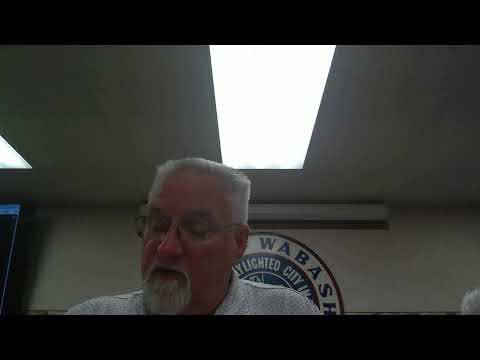
Wabash City Board approves Nov. 6 minutes, city and sewage claims and a conflict disclosure for Jim Reynolds
Summary
At its Nov. 20, 2025 meeting the Wabash City Board of Public Works and Safety approved the Nov. 6 meeting minutes, city and sewage claims and a uniform conflict-of-interest disclosure for Jim Reynolds for 2026; no new business was raised and the board adjourned.
The Wabash City Board of Public Works and Safety met on Nov. 20, 2025, approved routine minutes and claims and signed off on a conflict-of-interest disclosure for Jim Reynolds for 2026.
The meeting opened with the board calling the session to order. A board member moved to approve the minutes of the Nov. 6 meeting “as presented,” and another member seconded; the Chair called for a voice vote and members responded “I,” carrying the motion.
The board then moved to approve the city and sewage claims as submitted. A motion and second were offered, the Chair called for a voice vote and those present indicated assent.
Under old business the board considered a uniform conflict-of-interest disclosure for Jim Reynolds covering 2026. A board member moved to approve the disclosure for Jim Reynolds; another member seconded and the board approved the motion by voice vote. The disclosure was described as the standard uniform conflict-of-interest form for 2026.
With no items listed under new business and no questions or comments from the audience, the Chair announced the next meeting date of Dec. 4, 2025, and adjourned the session. One participant described the meeting as “short to the point.”
Throughout the meeting actions were routine and procedural; there were no substantive policy debates, public testimony, or contested votes recorded in the transcript.