Get Full Government Meeting Transcripts, Videos, & Alerts Forever!
Get email alerts on the Code Enforcement topic
No spam. Unsubscribe anytime.
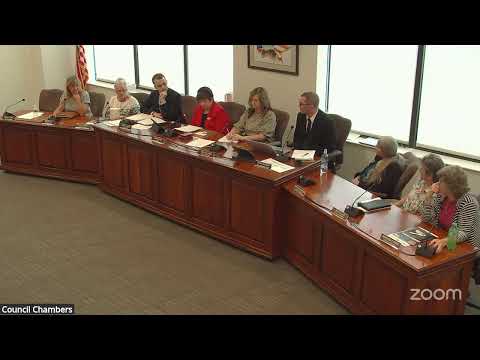
Council debates cutting vegetation appeal period from 20 days to 3 days; some members push for longer window
Summary
On first reading, Council considered Ordinance 2026-09 to cut the appeal period for tall-grass and nuisance vegetation violations from 20 to three days (to begin appeals to the city administrator); city staff said the three days is intended only to start the appeal, not to complete corrective work, while some councilors urged five to seven days for fairness and practical delays.
Council held the first reading of Ordinance 2026-09, a proposed amendment to the city’s property-maintenance code that would reduce the appeal period for high grass and vegetation violations from 20 days to three calendar days and designate the city administrator as the hearing officer.
City Administrator Chris Hacker explained the intent: "Currently there is a 20...day appeal period for tall grass...what we're hoping to do is...change this...to something much more beneficial to the city but also much more consistent with how our neighboring communities are dealing with high grass, weeds, and other unkempt yards." He told council the three-day window is to start the appeal process, not necessarily the time a resident has to physically cut grass; staff plan to use a visible door hanger as first notice and then work with residents on a reasonable timeline to abate the violation.
Several council members expressed concerns that three days would be too short for many residents. Council member Linda Allen asked whether the period could be amended to seven days; another member suggested splitting the difference to five days. "The 3 days is just the appeal process. That's not...you've got to have your grass cut in 3 days. This is just to get the process started," a councilor explained during the discussion, noting staff aim for voluntary compliance and flexibility for residents who need more time due to work or absence.
City staff clarified that under current local code nuisance vegetation is not considered a problem until it reaches 12 inches. If a property remains noncompliant after municipal abatement, the city can seek reimbursement or certification of unpaid charges to the county (a separate ordinance under consideration addresses abatement fees and certification procedures).
Ordinance 2026-09 was entered into the record on first reading; council members indicated they could consider a modest extension (for example five or seven days) before the second reading.
Next step: council will consider amendments and a second reading before adopting the ordinance.