Get Full Government Meeting Transcripts, Videos, & Alerts Forever!
Get email alerts on the Local Culture History topic
No spam. Unsubscribe anytime.
Lecture traces 400 years of queer history in Massachusetts
Summary
At a Conquered Pride presentation, historian Megan Michael sketched roughly four centuries of queer life in Massachusetts, highlighting early Puritan-era trials, shifting laws on sodomy and cross-dressing, notable same-sex households, and mid-20th-century organizing that led into the modern movement.
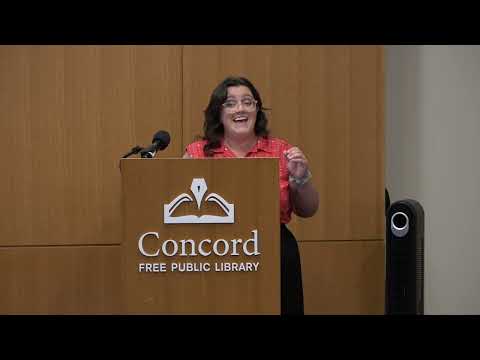
Megan Michael, the evening's presenter at a Conquered Pride event in Conquered, delivered a compact survey of roughly 400 years of queer life in Massachusetts, tracing legal shifts, private lives and early organizing from the 1600s up to the dawn of the modern movement.
Michael opened by noting that the first recorded same-sex trial in New England occurred in 1636 in Plymouth, involving John Alexander and Thomas Roberts, and said both men were punished though not executed despite laws that technically listed sodomy as a capital offense. "The laws and the realities don't always go hand in hand," she said, arguing that enforcement practices and local social ties often shaped outcomes.
Using diary entries and court records, Michael illustrated the private experience of queerness under Puritan norms. She quoted a 1653 journal entry by Reverend Michael Wigglesworth describing intense feelings for his male pupils, and pointed to the limited survival of candid material: much of what historians can recover from the 17th century comes from court records and coded diaries rather than public memoirs.
Michael traced a legal and cultural shift in the late 17th and early 18th centuries away from prosecutions focused solely on sodomy toward policing gender nonconformity: "Laws against cross-dressing were placed on the books beginning in 1695," she said, while noting that by 1700 the number of sodomy trials had dropped.
She highlighted several case studies to show variety in experience. The 1771 Boston-era case of John Gray, who sometimes dressed in women's clothing and was assaulted after the assaulter's discovery of Gray's sex, resulted in a damages award to Gray (18 pounds), Michael said, and she cited lawyers identified in historical records who participated in the matter. Michael used the episode to underline how courts could produce outcomes that diverged from prevailing statutes.
Turning to everyday life, Michael described partnerships such as Charity Bryant and Sylvia Drake (who marked July 3, 1807, as a shared anniversary) as early examples of long-term female households—later described in scholarship as "Boston marriages." She contrasted those stable domestic pictures with the later 19th-century medicalization of same-sex attraction: the term "homosexual" entered medical and legal discussion around 1870, producing both arguments for innate identity and also new forms of pathologizing and abuse.
Michael also treated literary- and political-era examples: she spoke about Charles Sumner's close, enduring correspondence with Samuel Gridley Howe as an instance of a romantic friendship that became riskier as careers and public life expanded; and she profiled Annie Fields and Sarah Orne Jewett as a well-known late-19th-century household whose close partnership was recognized by friends while remaining discreet in public.
Addressing race and queerness, Michael discussed Angelina Weld Grimké's family background and literary work, noting private writings and poems that expressed queer longing and that some of this material was published only after her death. She emphasized how race and sexuality created layered constraints on speech and public life.
Michael concluded with a mid-20th-century throughline: Prescott Townsend, who after an arrest in 1943 began organized advocacy and public lobbying for queer rights in Massachusetts, and who took part in early protests and the social currents that fed into later Stonewall-era activism. "The third and last phase in my life has been the fight for social justice," she quoted Townsend as saying, framing his later activism as bridging older eras to the modern movement.
The talk closed with a direct appeal to historical continuity: "We have always been here," Michael said, urging attendees to use historical perspective when assessing contemporary laws and debates affecting transgender and queer people. After the lecture she thanked the audience and invited further conversation.
The presentation combined legal history, personal diaries and literary examples to show a complex, uneven arc from punitive laws to organized advocacy; Michael said she could have continued into the late 20th century but chose to stop at the Stonewall era to keep the talk concise. Conquered Pride hosted the event and introduced the speaker.