Get Full Government Meeting Transcripts, Videos, & Alerts Forever!
Get email alerts on the Ffpsa Implementation topic
No spam. Unsubscribe anytime.
Task force hears progress, data gaps as Indiana implements Family First Prevention Services Act
Summary
State task force reviewed Indiana's Family First Prevention Services Act implementation, hearing a high‑level DCS briefing on prevention, kinship supports and QRTP rules and outside analysis showing Indiana's innovative approach but limited federal claiming and rising per‑child costs.
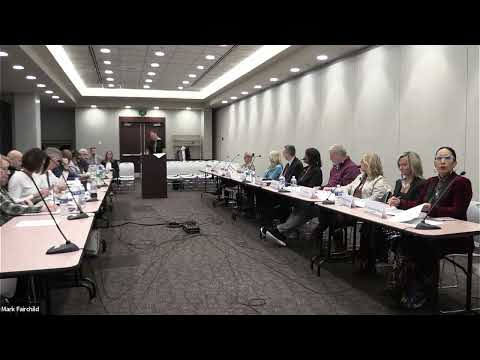
State Representative Dale Devon convened the Commission on Improving the Status of Children task force for a second meeting focused on the Family First Prevention Services Act (FFPSA), where Department of Child Services staff and outside experts described how Indiana has shifted federal resources toward prevention while confronting data limits, eligibility constraints and cost pressures.
Harmony, identified as executive director of operations at DCS, told the panel FFPSA "was federal legislation enacted in the first Trump administration in 2018" and was designed to "transform child welfare" by allowing states to draw down Title IV‑E funds for prevention services that use evidence‑based practices. She said Indiana's five‑year plan was approved by the Administration for Children and Families in 2022 and that the state uses a mix of clearinghouse‑listed practices and locally evaluated models to qualify services for federal reimbursement.
The presentation outlined three prevention tiers: primary prevention (early family supports and Family Resource Centers), tertiary preservation services delivered in‑home, and supports for kinship placements. Harmony said Indiana operates 11 Family Resource Centers but cautioned one of those is privately funded and not IV‑E eligible. She emphasized that congregate or residential treatment now faces stricter rules: only Qualified Residential Treatment Programs (QRTPs) that meet program, staffing and accreditation standards and receive a court review within 60 days may draw IV‑E funding.
"We have to make sure residential treatment is treatment, not placement," Harmony said, describing required elements such as trauma‑informed care, a qualified professional's assessment, nursing or clinical staff 24/7 and six months of post‑discharge planning. She also described kinship navigators, an IV‑E‑funded role that supports relatives who take in children for the first 30 days to stabilize placements.
Panel members pressed for data on outcomes. Harmony noted the difficulty of isolating single causes—co‑occurring mental health and substance‑use disorders, domestic violence and other factors complicate measurement—but said the department reviews cases for federal reporting and reported a long‑term decline in some severe outcomes since FFPSA implementation. She also said the hotline handles roughly 125,000 calls annually (about 10,000 a month), with around 100 operators and an average response time of about 20 seconds; "screen outs" are calls the structured decision‑making tool shows do not meet abuse‑or‑neglect thresholds.
The task force then heard a national perspective from David (Dave) DeStafano, a private consultant with long experience in child‑welfare financing. DeStafano praised Indiana's community pathway and the state's family preservation model, but said Indiana draws relatively little federal funding for residential care because of low IV‑E eligibility penetration and an AFDC look‑back that reduces eligibility for some children. He reported that the cost per child in foster care rose about 33% nationally between 2018 and 2023 and pointed to higher wages, benefits, accreditation and liability insurance as key drivers.
DeStafano recommended states maximize Title IV‑E and Medicaid claiming where appropriate and noted data lags and differing public sources can produce varying totals; he said he found some federal datasets listing higher call volumes than state reports. He also warned that clinical capacity is a binding constraint for evidence‑based prevention services: "You can hire clinicians, and then they leave for private practice," he said, describing turnover and recruitment challenges.
Judge Dana Kenworthy told the group the juvenile justice data infrastructure is improving: a data committee and pilot sites have collected a dataset of about 35,000 youth over five years, but data quality remains uneven and will require additional work to produce reliable statewide reporting for policy decisions.
Committee members highlighted remaining gaps: a need for stronger step‑down services after residential treatment, limits to provider capacity for evidence‑based interventions, and the effects of juvenile justice coding on foster‑care counts. Harmony and other DCS staff said the department is amending its prevention plan to include justice‑involved youth and is pursuing workforce and recruitment grants to bolster provider capacity.
The task force set a next meeting for Feb. 4 and adjourned. No formal votes or binding decisions were recorded during the session.
Ending: The commission will continue the task force work in February to refine data needs, review implementation outcomes and identify gaps in the service continuum.