Get Full Government Meeting Transcripts, Videos, & Alerts Forever!
Get email alerts on the Youth Justice Priorities topic
No spam. Unsubscribe anytime.
Youth Justice council narrows priorities to gun violence, legislative engagement and data
Summary
At its June meeting the YJOC heard work‑group updates and agreed to focus near‑term efforts on community safety (including gun violence), legislative strategy and improved statewide data and placement capacity; members were asked to claim priorities for August.
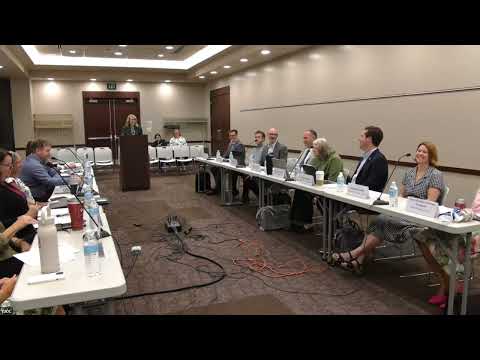
The Youth Justice Oversight Council (YJOC) met and spent its main session setting priorities for the coming year, singling out community safety and gun violence, legislative engagement, and data quality and placement capacity as near‑term focuses.
Judge Dana Kenworthy opened the meeting and framed the session as a planning exercise to break a large workload into actionable pieces: "How do you eat the elephant, one bite at a time," she said, asking members to identify which topics their work groups would adopt before the August meeting. Members then went around the table offering specific priorities and proposed next steps.
Mark urged the council to define the group’s formal charge and to pick three legislative and engagement priorities for the year so the council can pursue them with focus. "Legislative engagement and then engagement with other stakeholders," he said, arguing for a mix of defensive review of proposed bills and proactive proposals to carry forward. Several members echoed the need for both reactive review of legislation and proactive, evidence‑based proposals to present to lawmakers.
Data quality emerged as a consistent theme. "My number one priority is data," Nancy said, noting that the state cannot currently produce a single, reliable count of children in secured detention without contacting individual facilities. Participants described fragmented reporting systems and urged work to standardize definitions, improve data entry and build a funding map so counties can identify sustainable resources.
Several members raised immediate safety concerns. Judges and prosecutors pointed to an increase in firearm offenses and the alarming appearance of conversion devices that effectively create machine‑gun capability. Judge Broadwell said she is seeing more cases involving those devices and urged education and prevention efforts alongside enforcement.
Members also discussed placement shortages for high‑acuity youth, inconsistent acceptance criteria at residential treatment programs and the difficulty many counties face finding a local secured bed. Several speakers recommended mapping bed availability and exploring funding or staffing incentives so existing units can open and operate reliably.
The council voted earlier in the meeting to approve the Feb. 12 and April 9 minutes after a single requested edit to the April 9 document.
Judge Kenworthy closed by asking staff to circulate a digest of the today’s priorities with meeting minutes and asked members and work groups to "call dibs" on topics they will advance before the council reconvenes in August. She also asked staff to pursue youth and family input to inform the next meeting.
What’s next: council staff will circulate a digest and a set of suggested action lanes for each priority; members were asked to indicate which work groups will own each lane ahead of the August meeting.